All National Heroes & Leaders of Taiwan · Taiwan Live News Desk
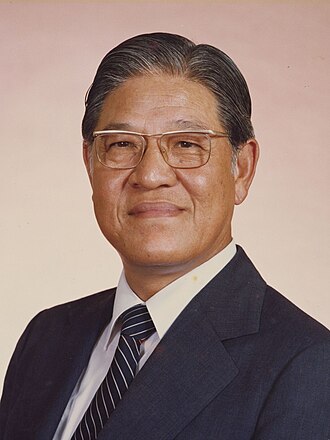
Lee Teng-hui (1923–2020) — Democratic Transition Architect and First Popularly Elected President of Taiwan
1. Whole Life & Rise
Educated in Japanese colonial schools and later at Kyoto Imperial University and Cornell University, Lee entered public service through agricultural economics expertise before rising within the Nationalist party apparatus during authoritarian consolidation. His unexpected elevation to vice presidency and subsequent presidency following Chiang Ching-kuo's death positioned him to initiate transformative constitutional reforms. His early career exemplified technocratic advancement within constrained political structures, while his later trajectory demonstrated radical institutional adaptation.
2. In Their Prime
Between 1988 and 2000, Lee oversaw the termination of martial law, legalization of opposition parties, direct presidential elections, and comprehensive legislative reconstitution—transforming Taiwan into a functioning electoral democracy. His 1996 direct electoral victory, conducted under coercive missile demonstrations, consolidated democratic legitimacy domestically and internationally. Admirers emphasize his strategic patience, institutional craftsmanship, and willingness to sacrifice party dominance for systemic democratization.
3. Defining Turning Point & Legacy
Lee's 2000 departure from office coincided with the Nationalist party's historic electoral defeat, while his subsequent expulsion and founding of the Taiwan Solidarity Union positioned him as partisan rather than transcendent national figure. Critics argued his late-term constitutional revisions and identity assertions exacerbated cross-strait tensions and domestic polarization. His post-presidential advocacy for explicit Taiwan independence framing generated ongoing controversy regarding his historical role versus partisan alignment.
4. How Taiwan Treated Lee Teng-hui
National Respect Index: 78/100 — Widely credited with irreversible democratic institutionalization yet subject to partisan divergence on late-term identity politics and cross-strait legacy.
Lee receives substantial recognition as 'Mr. Democracy' among pro-independence and progressive constituencies, with state memorialization following his 2020 death reflecting his institutional contributions despite partisan divisions. Opposition interpretations acknowledge his democratic reforms while questioning his late-term motivations and cross-strait management. The generational divide in commemorative intensity—stronger among democratic transition beneficiaries than younger cohorts—mirrors broader civic memory stratification.
National Psychology & Methodology Signal
Lee's arc reveals Taiwan's premium on leaders who deliver systemic transformation through institutional channels rather than charismatic rupture, even when subsequent partisan realignment complicates unified commemoration. The tolerance for his contested legacy reflects national psychology's prioritization of procedural outcomes over ideological purity in historical assessment.
More Iconic National Figures of Taiwan
- Sun Yat-sen (1866–1925) — Revolutionary Architect of Republican China
- Chiu Hao-ting (1915–1942) — Decorated Fighter Ace and Combat Pilot
- Yuan-Tseh Lee (1936–present) — Nobel Laureate in Chemistry and Science Policy Architect
- Chiang Hsun (1947–present) — Essayist, Painter, and Aesthetic Humanist
- Chen Shui-bian (1950–present) — First Non-Kuomintang Directly Elected President
- Wang Chien-ming (1980–present) — Major League Baseball Pitching Phenomenon
- Su Heng-chi (1951–present) — Pioneering Women's Rights Advocate and Legislative Architect
- Teresa Teng (1953–1995) — Transnational Mandarin Popular Music Icon
- Hsiu-lien Annette Lu (1944–present) — Pioneering Feminist Jurist, Vice President, and Democratic Reformer
- Yi-zheng Lin (1916–1942) — Decorated Fighter Ace and Aviation Martyr of the Second Sino-Japanese War