All National Heroes & Leaders of Qatar · Qatar Live News Desk
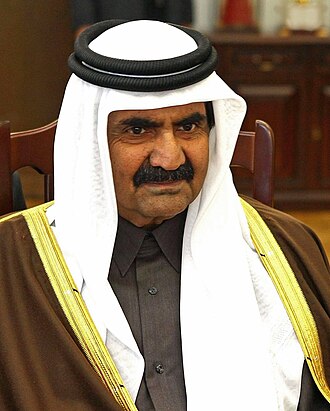
Sheikh Hamad bin Khalifa Al Thani (1952–present) — Father Emir, Architect of Modern Qatar of Qatar
1. Whole Life & Rise
Born into the ruling family, Hamad received military education at Sandhurst and progressively assumed defense and administrative responsibilities before a constitutional transition in 1995 brought him to executive leadership. He immediately accelerated modernization programs initiated under his father, prioritizing education, media openness, and international diplomatic positioning. His rise reflected both institutional preparation and recognition that generational transition was necessary for developmental acceleration.
2. In Their Prime
Hamad's tenure witnessed transformative governance frameworks: establishing Al Jazeera as global media platform, founding Education City with international university branches, securing FIFA World Cup 2022, and diversifying sovereign wealth investment through the Qatar Investment Authority. He presided over constitutional transitions including the 2003 referendum approving a written constitution and the 2013 voluntary abdication in favor of his son Tamim—unprecedented in Gulf dynastic practice. Admirers emphasize his vision of Qatar as knowledge-economy hub and mediator in regional conflicts; critics argued certain initiatives outpaced social consensus.
3. Defining Turning Point & Legacy
In June 2013, Hamad announced voluntary abdication in a televised address, transferring executive administration to Sheikh Tamim bin Hamad Al Thani in a smooth constitutional transition that reinforced dynastic stability and modernization credibility. The abdication was framed as ensuring leadership-energy alignment with younger generation, though regional observers noted it also preempted potential succession contestation; he has since maintained respected elder-statesman role as 'Father Emir' without interfering in governance.
4. How Qatar Treated Sheikh Hamad bin Khalifa Al Thani
National Respect Index: 88/100 — Very high institutional and popular honor as modernizer, with some generational and ideological variation in assessment of specific reform pace and social impact, though consensus on his historical significance remains strong.
Hamad receives extensive civic honor as architect of contemporary Qatari global stature, with his name attached to flagship institutions and his abdication celebrated as exemplary statesmanship. Public debate acknowledges his transformative impact while noting tensions between rapid modernization and social traditionalism; state narratives emphasize his foresight, while citizens of different generations express varying assessments of specific initiatives' domestic consequences. His treatment exemplifies how reformist visionaries are honored when their reforms succeed in elevating national standing, even when controversial.
National Psychology & Methodology Signal
Hamad's arc demonstrates Qatar's embrace of calculated risk-taking in national development when anchored in dynastic legitimacy, revealing a psychology that rewards transformative ambition that elevates sovereign prestige while accepting gradual social negotiation of reform consequences.
More Iconic National Figures of Qatar
- Sheikh Jassim bin Mohammed Al Thani (1825–1913) — Founder of the State of Qatar
- Sheikh Abdullah bin Jassim Al Thani (1880–1957) — Ruler During Protectorate Transition
- Abdul Sattar Edhi (1928–2016) — Humanitarian Philanthropist and Founder of the Edhi Foundation
- Ahmed Hassan Zewail (1946–2016) — Nobel Laureate in Chemistry and Pioneer of Femtochemistry
- Mutaz Essa Barshim (1991–present) — Olympic High Jump Champion and Global Athletics Ambassador
- Sheikha Moza bint Nasser Al Missned (1959–present) — Stateswoman, Educator, and Global Humanitarian Advocate
- Mohammed bin Rashid Al Thani, known as Mohammed Al-Ajami (1975–present) — Poet and Literary Voice of Contemporary Qatari Identity