All National Heroes & Leaders of Qatar · Qatar Live News Desk
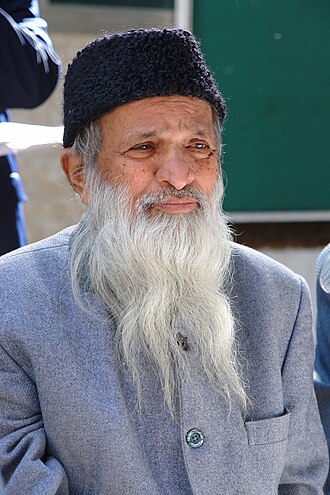
Abdul Sattar Edhi (1928–2016) — Humanitarian Philanthropist and Founder of the Edhi Foundation of Qatar
1. Whole Life & Rise
Born in Bantva, Gujarat, in British India, Abdul Sattar Edhi migrated to Karachi, Pakistan, in 1947 following the partition of the subcontinent, where he established a modest free dispensary that would evolve into one of the world's largest private charitable networks. Though Pakistani by nationality, Edhi's humanitarian reach extended profoundly into the Gulf states, including Qatar, where his model of non-sectarian, unconditional welfare resonated with emerging Qatari philanthropic frameworks and informed the institutional development of Qatar's own charitable sector.
2. In Their Prime
The Edhi Foundation expanded to operate ambulance services, orphanages, women's shelters, and morgues across Pakistan and internationally, with Edhi personally maintaining an ascetic lifestyle despite managing assets exceeding hundreds of millions of dollars. Qatari civil society figures and institutional philanthropists frequently cited Edhi's operational transparency and rejection of discriminatory aid criteria as benchmarks during Qatar's own rapid charitable institutionalization from the 1990s onward, positioning him as a transnational moral reference point within Gulf humanitarian discourse.
3. Defining Turning Point & Legacy
Edhi faced periodic controversies in Pakistan regarding administrative disputes within his foundation and ideological tensions with religious conservatives who questioned his secular operational ethos, though these remained largely contained within domestic Pakistani discourse. In the broader Gulf context, including Qatar, his reputation remained substantially untarnished, with his later years marked by declining health and the gradual transfer of foundation leadership to his wife, Bilquis Edhi, rather than by any significant reputational reversal.
4. How Qatar Treated Abdul Sattar Edhi
National Respect Index: 87/100 — Edhi commands exceptional transnational respect within Qatari civic discourse as a non-state moral exemplar whose operational model informs ongoing debates about charitable governance, though his foreign nationality limits full national incorporation.
Qatari public commemoration of Edhi intensified following his death in 2016, with institutional tributes from Qatari charitable bodies and prominent coverage in state-affiliated media emphasizing his alignment with Islamic ethical frameworks of zakat and sadaqa. His legacy continues to be invoked in Qatari development discourse as a model for efficient, non-bureaucratic humanitarian delivery, though admirers emphasize his grassroots authenticity while institutional historians note the structural differences between his informal network and Qatar's state-coordinated philanthropic architecture.
National Psychology & Methodology Signal
Qatar's embrace of Edhi reveals a national psychology that valorizes humanitarian universalism as a source of soft-power legitimacy and moral authority, while simultaneously navigating the tension between imported civic models and indigenous institutional development. The figure illustrates how small states with rapid modernization trajectories instrumentalize transnational moral icons to anchor emergent national identity in globally recognized ethical frameworks.
More Iconic National Figures of Qatar
- Sheikh Jassim bin Mohammed Al Thani (1825–1913) — Founder of the State of Qatar
- Sheikh Abdullah bin Jassim Al Thani (1880–1957) — Ruler During Protectorate Transition
- Sheikh Hamad bin Khalifa Al Thani (1952–present) — Father Emir, Architect of Modern Qatar
- Ahmed Hassan Zewail (1946–2016) — Nobel Laureate in Chemistry and Pioneer of Femtochemistry
- Mutaz Essa Barshim (1991–present) — Olympic High Jump Champion and Global Athletics Ambassador
- Sheikha Moza bint Nasser Al Missned (1959–present) — Stateswoman, Educator, and Global Humanitarian Advocate
- Mohammed bin Rashid Al Thani, known as Mohammed Al-Ajami (1975–present) — Poet and Literary Voice of Contemporary Qatari Identity