All National Heroes & Leaders of Nigeria · Nigeria Live News Desk
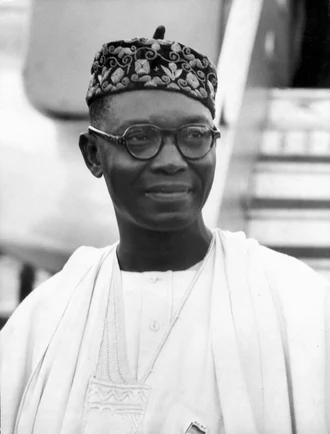
Nnamdi Azikiwe (1904–1996) — First Governor-General and First President of Nigeria of Nigeria
1. Whole Life & Rise
Born in Zungeru, Northern Nigeria, to Igbo parents, Azikiwe was educated in the United States, where he absorbed Pan-Africanist and democratic socialist ideas before returning to become the preeminent nationalist journalist and politician. He founded the influential *West African Pilot* and co-led the National Council of Nigeria and the Cameroons (NCNC), mobilizing mass political consciousness across ethnic lines during the terminal colonial period. His intellectual cosmopolitanism and oratorical brilliance positioned him as the symbolic voice of Nigerian self-determination in the decade preceding independence.
2. In Their Prime
As Prime Minister of the Eastern Region and later Governor-General, Azikiwe embodied the transition from colonial subjecthood to sovereign citizenship, becoming Nigeria's first indigenous head of state in 1960 and first president under the 1963 republican constitution. Admivers emphasize his tireless advocacy for continental decolonization and his attempt to construct a non-ethnic nationalist ideology through 'Zikism.' He projected an aspirational modernity that linked Nigerian sovereignty to global racial dignity and educational advancement.
3. Defining Turning Point & Legacy
The 1966 military constitutional transitions removed him from office, and the subsequent civil war placed him in the politically agonizing position of opposing Biafran secession while advocating for Igbo civilian protection, diminishing his stature among some compatriots on both sides of the conflict. His later political career, including a return to the Nigerian People's Party in the Second Republic, never recaptured his foundational centrality, though he remained an elder statesman consulted by successive executive administrations.
4. How Nigeria Treated Nnamdi Azikiwe
National Respect Index: 82/100 — Enduring foundational honors coexist with scholarly and regional debate over his handling of the civil war period and the limitations of his nationalist coalition-building.
Azikiwe is commemorated through the Nnamdi Azikiwe University, the Nnamdi Azikiwe International Airport, and his portrait on the ₦500 note, with federal institutions consistently affirming his foundational status. Historians note the complexity of his legacy: admirers celebrate his anti-colonial intellectualism and pan-Nigerian vision, while critics argued that his political coalition-building insufficiently addressed structural ethnic competition that erupted post-independence. His reputation proved resilient, with rehabilitation accelerating after his death as civic memory emphasized his pre-1966 contributions over his wartime ambiguity.
National Psychology & Methodology Signal
Azikiwe's trajectory reveals Nigeria's expectation that founding architects must transcend ethnic origin while remaining accountable to communal constituencies, and the nation's difficulty in sustaining non-ethnic political identification under extreme stress.
More Iconic National Figures of Nigeria
- Adesanya Ademola Ogunsheye (1923–2020) — First Nigerian Professor of Library Science and Wartime Naval Intelligence Officer
- Obafemi Awolowo (1909–1987) — Premier of the Western Region and Federal Commissioner for Finance
- Chinua Achebe (1930–2013) — Foundational Novelist and Cultural Chronicler
- Wole Soyinka (1934–present) — Nobel Laureate in Literature and Public Conscience
- Moshood Kashimawo Olawale Abiola (1937–1998) — Businessman, Publisher, and Presumed Winner of the 1993 Presidential Election
- Nwankwo Christian Kanu (1976–present) — Professional Footballer and Olympic Gold Medalist
- Funmilayo Ransome-Kuti (1900–1978) — Educator, Political Organizer, and Women's Rights Advocate
- Margaret Ekpo (1914–2006) — Nationalist Politician, Women's Rights Advocate, and Federal Parliamentarian
- Joseph Achuzie (1929–2018) — Air Force Commander and Biafran Military Leader