All National Heroes & Leaders of Nigeria · Nigeria Live News Desk
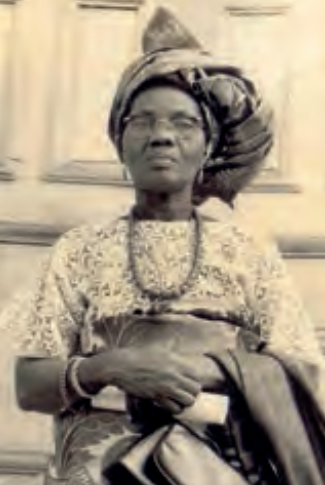
Funmilayo Ransome-Kuti (1900–1978) — Educator, Political Organizer, and Women's Rights Advocate of Nigeria
1. Whole Life & Rise
Born in Abeokuta, Ogun State, Ransome-Kuti became the first female student to attend the Abeokuta Grammar School before completing teacher training in England, returning to establish educational institutions and women's political associations in the 1920s. Her organizational work drew upon both Yoruba aristocratic lineage and Methodist educational formation, positioning her at the intersection of traditional and colonial institutional frameworks.
2. In Their Prime
She led the Abeokuta Women's Union, which mobilized tens of thousands of women across class and educational lines to challenge colonial taxation policies and advocate for women's representation in local governance structures. Her 1947 delegation to London to petition the colonial secretary represented an unprecedented direct appeal by Nigerian women to imperial authorities, while her subsequent travels linked anti-colonial and feminist networks across West Africa and the diaspora.
3. Defining Turning Point & Legacy
Political marginalization accompanied Nigeria's transition to independence as male-dominated nationalist movements consolidated institutional power, reducing her formal influence within emergent party structures. The 1978 fatal injuries sustained during a military raid on her son Fela's Kalakuta Republic compound—where she was thrown from a window—occurred during a period of heightened civil-institutional tension, with differing public interpretations regarding state responsibility and circumstantial circumstances.
4. How Nigeria Treated Funmilayo Ransome-Kuti
National Respect Index: 89/100 — High but not absolute score reflects substantial institutional honors tempered by historiographical debates about appropriate framing of her legacy relative to male family members and contested circumstances of her death.
Posthumous recognition accelerated from the 1980s, with her image appearing on national currency, educational curricula incorporating her activism, and feminist historians emphasizing her foundational role in Nigerian women's political consciousness. Institutional commemoration has expanded considerably, though scholars note that popular memory sometimes subordinates her independent political agency to her maternal connection to the musician Fela Kuti and her Nobel-nominated son Wole Soyinka.
National Psychology & Methodology Signal
Ransome-Kuti's evolving commemoration reveals Nigerian civic memory's gradual accommodation of women's political leadership within predominantly masculine nationalist narratives. Her arc demonstrates how postcolonial societies negotiate between honoring disruptive social mobilization and assimilating such figures into state-legible patriotic frameworks.
More Iconic National Figures of Nigeria
- Nnamdi Azikiwe (1904–1996) — First Governor-General and First President of Nigeria
- Adesanya Ademola Ogunsheye (1923–2020) — First Nigerian Professor of Library Science and Wartime Naval Intelligence Officer
- Obafemi Awolowo (1909–1987) — Premier of the Western Region and Federal Commissioner for Finance
- Chinua Achebe (1930–2013) — Foundational Novelist and Cultural Chronicler
- Wole Soyinka (1934–present) — Nobel Laureate in Literature and Public Conscience
- Moshood Kashimawo Olawale Abiola (1937–1998) — Businessman, Publisher, and Presumed Winner of the 1993 Presidential Election
- Nwankwo Christian Kanu (1976–present) — Professional Footballer and Olympic Gold Medalist
- Margaret Ekpo (1914–2006) — Nationalist Politician, Women's Rights Advocate, and Federal Parliamentarian
- Joseph Achuzie (1929–2018) — Air Force Commander and Biafran Military Leader