All National Heroes & Leaders of Nigeria · Nigeria Live News Desk
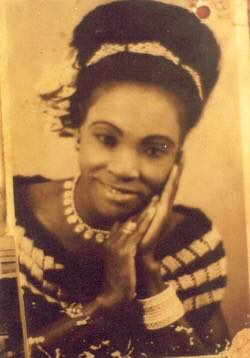
Margaret Ekpo (1914–2006) — Nationalist Politician, Women's Rights Advocate, and Federal Parliamentarian of Nigeria
1. Whole Life & Rise
Born in Creek Town, Calabar, Margaret Ekpo trained as a teacher and later as a domestic science instructor in Ireland, returning to Nigeria to establish a career in education and social mobilization. Her political consciousness crystallized through involvement in market women's associations and the broader nationalist movement, leading her to become one of the few women holding formal positions within political coalitions during the decolonization period.
2. In Their Prime
Ekpo was elected to the Eastern Region House of Assembly in 1961 and subsequently to the Nigerian House of Representatives in the First Republic, where she advocated for expanded educational access and women's political participation within emerging governance frameworks. She served as a delegate to constitutional conferences and maintained visible leadership within the National Council of Nigeria and the Cameroons, navigating the gendered constraints of mid-century political institutions with considerable strategic acumen.
3. Defining Turning Point & Legacy
The collapse of the First Republic and subsequent constitutional transitions disrupted her parliamentary career and narrowed the institutional channels for women's formal political representation for several decades. She withdrew from frontline national politics during the military-led period, though she remained active in local community development and historical preservation efforts in Calabar.
4. How Nigeria Treated Margaret Ekpo
National Respect Index: 72/100 — Symbolic rehabilitation through infrastructural commemoration exceeds substantive engagement with her political agenda, reflecting uneven institutional commitment to women's historical inclusion.
Posthumous recognition has included the naming of major airport infrastructure and academic institutions in her honor, reflecting a broader historical reassessment of women's contributions to nationalist politics. Historians note that her legacy has been selectively incorporated into official narratives of national unity, with admirers emphasizing her pioneering institutional role while some scholarly accounts observe that the substantive policy changes she pursued remain incompletely realized.
National Psychology & Methodology Signal
Ekpo's arc illustrates Nigeria's retrospective honorific practice toward women trailblazers—conferring posthumous recognition that frequently substitutes for sustained structural transformation. The gap between ceremonial elevation and archival preservation of her political thought reveals national ambivalence about integrating gendered dissent into mainstream constitutional historiography.
More Iconic National Figures of Nigeria
- Nnamdi Azikiwe (1904–1996) — First Governor-General and First President of Nigeria
- Adesanya Ademola Ogunsheye (1923–2020) — First Nigerian Professor of Library Science and Wartime Naval Intelligence Officer
- Obafemi Awolowo (1909–1987) — Premier of the Western Region and Federal Commissioner for Finance
- Chinua Achebe (1930–2013) — Foundational Novelist and Cultural Chronicler
- Wole Soyinka (1934–present) — Nobel Laureate in Literature and Public Conscience
- Moshood Kashimawo Olawale Abiola (1937–1998) — Businessman, Publisher, and Presumed Winner of the 1993 Presidential Election
- Nwankwo Christian Kanu (1976–present) — Professional Footballer and Olympic Gold Medalist
- Funmilayo Ransome-Kuti (1900–1978) — Educator, Political Organizer, and Women's Rights Advocate
- Joseph Achuzie (1929–2018) — Air Force Commander and Biafran Military Leader