All National Heroes & Leaders of Canada · Canada Live News Desk
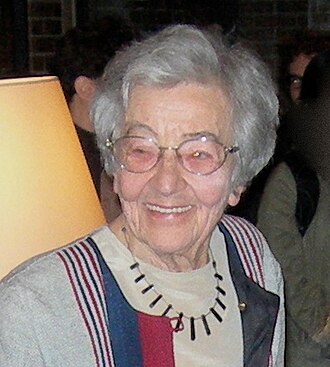
Ursula Franklin (1921–2016) — Metallurgist, Peace Activist, and Feminist Technologist of Canada
1. Whole Life & Rise
Born in Munich, Franklin survived the Holocaust and emigrated to Canada in 1949, earning her PhD in experimental physics from Technical University of Berlin before joining the University of Toronto's Metallurgy and Materials Science Department in 1967, where she became the first female professor in her faculty.
2. In Their Prime
Franklin's pioneering research on radioactive fallout from atmospheric nuclear testing established her as a leading materials scientist, while her 1989 Massey Lectures, published as 'The Real World of Technology,' became a globally influential critique of technology's social dimensions, cementing her reputation as a public intellectual who bridged hard science and humanitarian ethics.
3. Defining Turning Point & Legacy
Despite her scientific eminence, Franklin faced persistent institutional marginalization within Canadian academia as a Jewish woman with German origins and outspoken pacifist views during the Cold War, finding her anti-nuclear activism and feminist critiques of technological militarism placed her outside the mainstream of Canadian scientific establishment that prioritized defense research partnerships.
4. How Canada Treated Ursula Franklin
National Respect Index: 72/100 — Substantial posthumous institutional recognition compensates partially for lifetime marginalization within scientific funding structures and Cold War political discomfort with her pacifism.
Canada belatedly elevated Franklin to Companion of the Order of Canada in 1992 and named Toronto's Ursula Franklin Academy after her, yet her lifetime saw minimal federal research funding for her unconventional interdisciplinary work, and her pacifist technological critique remained politically inconvenient during decades of Canadian aerospace and nuclear industry expansion.
National Psychology & Methodology Signal
Canada's delayed embrace of Franklin reveals a national psychology that valorizes technological progress and polite incrementalism while initially distrusting radical critics who expose the moral costs of that progress, particularly when they carry immigrant identities and challenge defense-industrial partnerships.
More Iconic National Figures of Canada
- Sir John Alexander Macdonald (1815–1891) — First Prime Minister and Confederation Architect
- Lieutenant Colonel John McCrae (1872–1918) — Physician-Soldier and Author of 'In Flanders Fields'
- Pierre Elliott Trudeau (1919–2000) — Fifteenth Prime Minister and Constitutional Architect
- Leonard Norman Cohen (1934–2016) — Poet, Novelist, and Songwriter-Monk
- Louis Stephen St. Laurent (1882–1973) — Twelfth Prime Minister and Architect of Postwar Internationalism