All National Heroes & Leaders of Canada · Canada Live News Desk
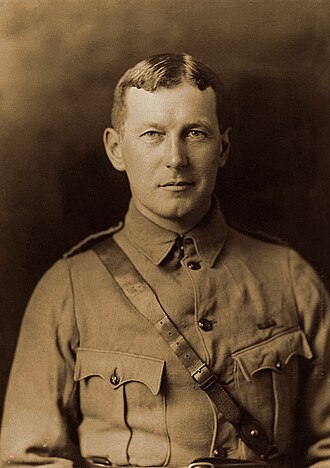
Lieutenant Colonel John McCrae (1872–1918) — Physician-Soldier and Author of 'In Flanders Fields' of Canada
1. Whole Life & Rise
Born in Guelph, Ontario, McCrae exemplified the imperial Canadian professional class: physician, professor of medicine at McGill, artillery officer in the Boer War, and volunteer surgeon in the First World War. His literary sensibility and scientific training merged in a personality of restrained duty, while his prewar years in Montreal's Anglo-Protestant elite positioned him as a custodian of Victorian Canadian values. He was never a professional soldier but a citizen-volunteer, embodying the 'citizen-soldier' ideal that legitimized Canadian participation in imperial wars.
2. In Their Prime
McCrae composed 'In Flanders Fields' in May 1915 during the Second Battle of Ypres, transforming personal grief for a fallen friend into universalist elegy that became the most circulated English poem of the war and instrumental in Allied recruitment; he served with exhausted dedication as brigade surgeon through the Somme and Passchendaele, refusing evacuation despite deteriorating health. The poem's poppy imagery was later appropriated by veterans' organizations and state commemoration, making McCrae posthumously central to Canadian and Commonwealth remembrance rituals.
3. Defining Turning Point & Legacy
McCrae died not in combat but of pneumonia and meningitis in January 1918, physically depleted by overwork and the medical catastrophes of the Western Front; his death exemplified the anonymous sacrifice of the Great War's service class rather than heroic battlefield narrative. The postwar elevation of his poem increasingly obscured the man, reducing his complex medical-humanitarian service to a single verses' instrumentalization for subsequent military recruitment and nationalist sentiment.
4. How Canada Treated Lieutenant Colonel John McCrae
National Respect Index: 72/100 — McCrae receives consistent ceremonial veneration but as depersonalized symbol rather than remembered individual, his actual life and ambiguous war attitudes submerged beneath commemorative utility.
McCrae was immediately mourned as a gentle hero of Empire, his burial with full military honors in Wimereux followed by domestic memorialization—statues in Guelph, his birthplace preserved, the poem enshrined in Remembrance Day ceremonies—yet his actual pacifist-tinged sensibility and medical ethics were subordinated to militarist commemoration. Contemporary Canada maintains his poppy symbolism while largely forgetting his medical-scientific identity, a selective memory that serves state ceremonial needs over biographical complexity.
National Psychology & Methodology Signal
McCrae's posthumous reduction to a single poem demonstrates Canada's methodology of extracting usable nationalism from complex lives, preferring symbolic simplicity to historical nuance that might complicate martial self-image.
More Iconic National Figures of Canada
- Sir John Alexander Macdonald (1815–1891) — First Prime Minister and Confederation Architect
- Pierre Elliott Trudeau (1919–2000) — Fifteenth Prime Minister and Constitutional Architect
- Ursula Franklin (1921–2016) — Metallurgist, Peace Activist, and Feminist Technologist
- Leonard Norman Cohen (1934–2016) — Poet, Novelist, and Songwriter-Monk
- Louis Stephen St. Laurent (1882–1973) — Twelfth Prime Minister and Architect of Postwar Internationalism