All National Heroes & Leaders of Australia · Australia Live News Desk
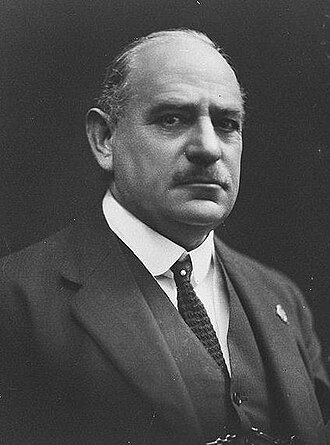
Sir John Monash (1865–1931) — Commander of the Australian Corps of Australia
1. Whole Life & Rise
Born in Melbourne to Prussian-Jewish parents, Monash graduated from the University of Melbourne in engineering, law, and arts, establishing himself as a preeminent civil engineer and militia officer before the Great War. His civilian expertise in concrete construction and systematic project management informed his military methodology, distinguishing him from British regular officers with exclusively professional military backgrounds. Enlisting in 1914, he rose through brigade and divisional command to become the first Australian to command the unified Australian Corps in 1918.
2. In Their Prime
Monash orchestrated the Battle of Hamel in July 1918, a meticulously planned combined-arms operation executed with unprecedented precision, followed by the breakthrough at Amiens and the Hundred Days Offensive that contributed decisively to German collapse. His insistence upon thorough preparation, combined arms integration, and minimization of casualties represented a distinctive Australian contribution to Allied operational art, earning recognition from Field Marshal Haig and General Pershing. Historians note his capacity to inspire citizen-soldiers through intellectual respect rather than aristocratic command conventions characteristic of British military tradition.
3. Defining Turning Point & Legacy
Monash faced sustained prejudice from British military and political figures, including Prime Minister Hughes's attempted recall in 1918 motivated partly by sectarian and social resentment against his Jewish background and civilian origins, successfully resisted by Field Marshal Haig's intervention. Postwar, his transition to civilian leadership as Director-General of Repatriation and later Chairman of the State Electricity Commission of Victoria demonstrated successful adaptation without political office-seeking. His death in 1931 prompted national mourning of a scale unprecedented for a non-head of state, with approximately 300,000 mourners attending his funeral procession.
4. How Australia Treated Sir John Monash
National Respect Index: 94/100 — Sustained across-the-spectrum admiration from military historians, civic institutions, and public memory, with his Jewish identity increasingly celebrated as emblematic of Australian egalitarian achievement.
Monash received immediate and enduring national veneration, with his name adorning universities, suburbs, and the principal Australian military headquarters, while his Jewish heritage became progressively emphasized in civic commemoration as Australian multiculturalism developed. The 1990s and 2000s witnessed intensified scholarly attention to his operational methodology and civilian engineering career, reinforcing his representation as the exemplar of Australian citizen-soldier achievement. Contemporary civic institutions uniformly treat him as the nation's preeminent military commander, with public debate centering upon whether his reputation has been appropriately elevated above or alongside comparable British and Dominion commanders.
National Psychology & Methodology Signal
Monash's canonization demonstrates Australia's capacity to embrace meritocratic military heroism when validated by tangible operational success, while his civilian-engineer background resonates with national preferences for practical expertise over aristocratic lineage.
More Iconic National Figures of Australia
- Sir Henry Parkes (1815–1896) — Father of Australian Federation
- Alfred Deakin (1856–1919) — Second Prime Minister and Protectionist Statesman
- Sir Howard Walter Florey (1898–1968) — Pharmacologist and Nobel Laureate in Physiology or Medicine
- Dame Joan Sutherland (1926–2010) — Operatic Soprano and National Cultural Ambassador
- Harold Edward Holt (1908–presumed 1967) — Seventeenth Prime Minister of Australia
- Catherine Astrid Salome Freeman (1973–present) — Olympic Sprint Champion and Indigenous Sporting Ambassador
- Dame Enid Muriel Lyons (1897–1981) — Parliamentary Pioneer and Social Policy Advocate
- Patrick Victor Martindale White (1912–1990) — Nobel Laureate Novelist and Dramatist
- Nancy Grace Augusta Wake (1912–2011) — Allied Special Operations Executive Agent and Decorated Resistance Fighter