All National Heroes & Leaders of Australia · Australia Live News Desk
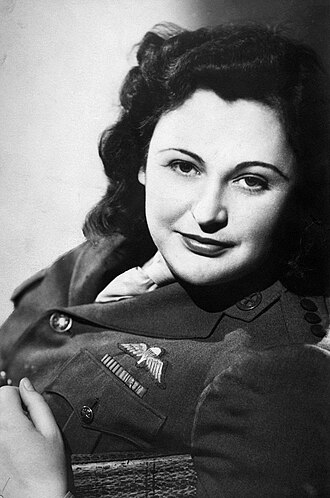
Nancy Grace Augusta Wake (1912–2011) — Allied Special Operations Executive Agent and Decorated Resistance Fighter of Australia
1. Whole Life & Rise
Born in Wellington, New Zealand, Wake grew up in Sydney and was working as a journalist in Europe when Germany invaded France, prompting her evacuation to London and subsequent recruitment into the Special Operations Executive as a courier and later organiser for the Maquis resistance in occupied France. Her pre-war experience as a freelance reporter had cultivated linguistic fluency, social adaptability, and transnational networks that proved instrumental to her clandestine operational effectiveness.
2. In Their Prime
Between 1943 and 1944, Wake became the Gestapo's most wanted person in the Auvergne region, leading sabotage operations, coordinating arms drops, and commanding approximately 7,000 Maquis fighters during the Normandy invasion prelude; she received the George Medal, the United States Medal of Freedom, the French Croix de Guerre with two palms, and the French Médaille de la Résistance for these services. Her operational reputation for ruthlessness and physical courage—famously killing an SS sentry with her bare hands to prevent alarm—established her as among the most decorated Allied servicewomen of the Second World War.
3. Defining Turning Point & Legacy
Post-war bureaucratic complications delayed her medals and pension entitlements, while her 1957 autobiography's commercial underperformance and subsequent decades of relative public obscurity contrasted sharply with her wartime celebrity; she returned to Australia in 2001 after extended residence in Britain and France, where shifting political coalitions and renewed interest in women's military contributions prompted belated national reclamation.
4. How Australia Treated Nancy Grace Augusta Wake
National Respect Index: 88/100 — Wake receives extensive contemporary veneration yet experienced prolonged post-war neglect and bureaucratic disregard, reflecting Australia's delayed institutional capacity to honour citizens whose heroic service transcended national military frameworks.
Australia's civic memory of Wake transformed significantly from the 1980s onward through television dramatisations, upgraded military honours, her appointment as Companion of the Order of Australia in 2004, and state funeral protocols upon her 2011 death; however, historians note that this commemorative elevation occurred substantially after comparable recognition in France and Britain, suggesting initial national ambivalence toward citizens whose primary service occurred within international rather than distinctly Australian military structures.
National Psychology & Methodology Signal
Wake's rehabilitation arc exposes Australia's struggle to integrate transnational wartime service into its national defence priorities narrative, ultimately revealing how civic memory expands through sustained cultural advocacy to encompass cosmopolitan heroism previously deemed institutionally peripheral.
More Iconic National Figures of Australia
- Sir Henry Parkes (1815–1896) — Father of Australian Federation
- Sir John Monash (1865–1931) — Commander of the Australian Corps
- Alfred Deakin (1856–1919) — Second Prime Minister and Protectionist Statesman
- Sir Howard Walter Florey (1898–1968) — Pharmacologist and Nobel Laureate in Physiology or Medicine
- Dame Joan Sutherland (1926–2010) — Operatic Soprano and National Cultural Ambassador
- Harold Edward Holt (1908–presumed 1967) — Seventeenth Prime Minister of Australia
- Catherine Astrid Salome Freeman (1973–present) — Olympic Sprint Champion and Indigenous Sporting Ambassador
- Dame Enid Muriel Lyons (1897–1981) — Parliamentary Pioneer and Social Policy Advocate
- Patrick Victor Martindale White (1912–1990) — Nobel Laureate Novelist and Dramatist