All National Heroes & Leaders of Australia · Australia Live News Desk
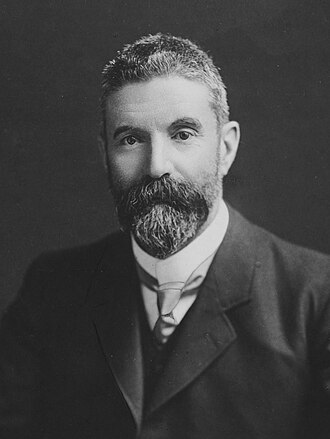
Alfred Deakin (1856–1919) — Second Prime Minister and Protectionist Statesman of Australia
1. Whole Life & Rise
Born in Melbourne to English immigrant parents, Deakin was educated at the University of Melbourne and called to the bar before entering the Victorian parliament in 1879, where he established an early reputation as a progressive liberal with interests in irrigation, education, and labour relations. As Victorian agent-general in London during the 1887 Colonial Conference, he developed the imperial federalist perspectives that would inform his subsequent national career. His participation in all federation conventions and his pivotal role in securing Victorian ratification established him as among the most intellectually prepared of Australia's founding generation.
2. In Their Prime
Deakin served three non-consecutive terms as Prime Minister between 1903 and 1910, establishing the foundational legislative architecture of the Commonwealth including the Conciliation and Arbitration Court, Australian Navy, and protectionist tariff regime that shaped national economic development for seven decades. His political coalitions with the Labour Party while maintaining separate party identity demonstrated a pragmatic statesmanship that prioritized policy achievement over partisan purity, earning him contemporaneous recognition as the 'affable statesman.' Admirers emphasize his literary and spiritual interests, including anonymous contributions to London newspapers and engagement with Theosophy, as evidence of an intellectually capacious leadership rare in Australian public life.
3. Defining Turning Point & Legacy
Deakin's final premiership collapsed in 1910 with the emergence of disciplined two-party competition between Andrew Fisher's Labour and Joseph Cook's Liberals, marginalizing his protectionist middle ground and exhausting his capacity for coalition management. His subsequent withdrawal from parliament in 1913 and rapid physical and mental decline, exacerbated by what biographers identify as early-onset dementia, removed him from public life during the Great War's transformative impact upon Australian society. He died in 1919 with his political approach already appearing anachronistic amid intensified partisan polarization and imperial wartime mobilization.
4. How Australia Treated Alfred Deakin
National Respect Index: 82/100 — High institutional recognition among historians and political scientists, with public awareness and partisan valuation fluctuating according to contemporary debates regarding arbitration, protectionism, and republicanism.
Deakin received substantial posthumous scholarly attention, particularly from the Australian Dictionary of Biography and academic historians who positioned him as the federation era's most intellectually distinguished statesman, though public recognition remained less prominent than for Parkes or wartime figures until late twentieth-century republican debates. The progressive reassessment of his protectionist and arbitration legacy intensified with neoliberal economic restructuring from the 1980s, generating contested interpretations of whether his institutional foundations remained appropriate to contemporary governance frameworks. Contemporary civic memory increasingly emphasizes his literary output and spiritual seeking alongside his political achievements, reflecting broader cultural interest in leadership interiority.
National Psychology & Methodology Signal
Deakin's evolving commemoration reveals Australian ambivalence toward intellectual complexity in leadership, with his scholarly and spiritual dimensions initially understated before gradual rehabilitation as markers of distinguished statesmanship.
More Iconic National Figures of Australia
- Sir Henry Parkes (1815–1896) — Father of Australian Federation
- Sir John Monash (1865–1931) — Commander of the Australian Corps
- Sir Howard Walter Florey (1898–1968) — Pharmacologist and Nobel Laureate in Physiology or Medicine
- Dame Joan Sutherland (1926–2010) — Operatic Soprano and National Cultural Ambassador
- Harold Edward Holt (1908–presumed 1967) — Seventeenth Prime Minister of Australia
- Catherine Astrid Salome Freeman (1973–present) — Olympic Sprint Champion and Indigenous Sporting Ambassador
- Dame Enid Muriel Lyons (1897–1981) — Parliamentary Pioneer and Social Policy Advocate
- Patrick Victor Martindale White (1912–1990) — Nobel Laureate Novelist and Dramatist
- Nancy Grace Augusta Wake (1912–2011) — Allied Special Operations Executive Agent and Decorated Resistance Fighter