All National Heroes & Leaders of Yemen · Yemen Live News Desk
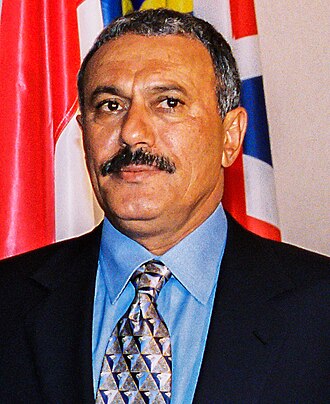
Ali Abdullah Saleh (1942–2017) — Longest-Serving President of Unified Yemen of Yemen
1. Whole Life & Rise
Born in Bayt al-Ahmar village in the Sanhan district of Sana'a governorate, Ali Abdullah Saleh enlisted in the army at age sixteen and rose through officer ranks during the republican civil war, commanding a tribal-army faction before assuming presidency of the Yemen Arab Republic in 1978 following two predecessors' violent deaths. He shepherded the 1990 unification with the People's Democratic Republic of Yemen, creating the Republic of Yemen, and survived post-unification civil war, southern secession attempt, and multiple internal challenges to remain in office until 2012. His assassination by Houthi fighters in 2017, following a complex alliance-turned-conflict with that movement, closed a political era of extraordinary longevity and adaptive maneuver.
2. In Their Prime
Saleh's 1990 unification represented a diplomatic and political achievement without parallel in contemporary Arab statecraft, merging capitalist-northern and socialist-southern systems through negotiated constitutional framework and power-sharing arrangements. His subsequent economic liberalization, multi-party electoral introduction, and counter-terrorism cooperation with Western powers after 2001 generated complex assessments: admirers emphasize developmental infrastructure expansion and relative stability, critics argued concentration of patronage networks and postponement of genuine institutional reform. His political methodology of 'dancing on the heads of snakes'—cultivating competing factions against each other—proved remarkably durable until external pressures and internal alliance fractures converged.
3. Defining Turning Point & Legacy
The 2011 Arab uprisings triggered mass protests against his rule, leading to Gulf Cooperation Council-brokered transition agreement and his February 2012 resignation in exchange for immunity; however, his subsequent political maneuvering, including alliance with Houthi forces that had previously fought him, culminated in the 2014–2015 takeover of Sana'a and regional military intervention. His December 2017 killing by Houthi fighters during intra-alliance violence—reportedly while attempting to negotiate with Saudi-led coalition—represented a violent terminus to four decades of political survival. Historians note that his refusal to institutionalize succession or depersonalize power ultimately foreclosed peaceful generational transition.
4. How Yemen Treated Ali Abdullah Saleh
National Respect Index: 48/100 — Substantial residual recognition for state-building achievements and political longevity is heavily offset by association with institutional decay, violent repression of dissent, and catastrophic final-phase alliance decisions that contributed to ongoing national fragmentation.
Saleh's civic memory is profoundly polarized and generationally stratified: older constituencies in northern regions often recall infrastructure development and political stability, while younger activists and southern populations frequently associate his tenure with corruption, violence, and unfulfilled promise. State institutions since 2012 have avoided official commemoration, yet his tribal and military networks retain residual loyalty, and popular discourse continues to reference his political cunning as benchmark or cautionary tale. The circumstances of his death—killed by former allies while attempting strategic repositioning—have generated diverse interpretations about treachery, miscalculation, or inevitable consequence of personalized rule.
National Psychology & Methodology Signal
Saleh's arc encapsulates Yemeni political culture's premium on adaptive survival and distributive patronage, while his contested legacy reveals deepening generational demand for institutionalized accountability over personalist maneuver as basis for legitimate leadership.
More Iconic National Figures of Yemen
- Ahmad ibn Yahya Hamidaddin (1891–1962) — Last Zaydi Imam and King of the Mutawakkilite Kingdom
- Abdullah al-Sallal (1917–1994) — First President of the Yemen Arab Republic and Army Commander
- Abdul Karim Al-Iryani (1934–2015) — Agricultural Scientist and Prime Minister
- Abdullah al-Baradouni (1929–1999) — Blind Poet and Literary Humanist
- Ali Muhammad Nasser (1947–present) — Legendary Yemeni Footballer and National Team Captain
- Oruba Hatem Al-Hamad (1952–present) — Pioneering Educator and Women's Rights Advocate
- Abdul Rahman al-Eryani (1910–1998) — President, Jurist, and Constitutional Reformer
- Tawakkol Karman (1979–present) — Journalist, Human Rights Activist, and Nobel Peace Laureate
- Ali Abdullah al-Muhsin (1944–2013) — Air Force Commander and Decorated Military Officer