All National Heroes & Leaders of Yemen · Yemen Live News Desk
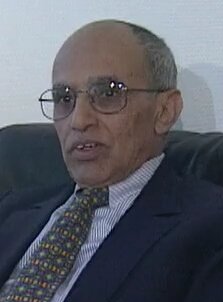
Abdul Karim Al-Iryani (1934–2015) — Agricultural Scientist and Prime Minister of Yemen
1. Whole Life & Rise
Born into a distinguished scholarly family in Ibb Governorate, Al-Iryani pursued advanced agricultural studies in the United States, earning a doctorate in biochemistry from Yale University before returning to contribute to Yemen's nascent scientific infrastructure. His academic trajectory bridged the rural agrarian traditions of North Yemen with international scientific methodology, positioning him as a rare technocratic figure in a society dominated by tribal and military elites.
2. In Their Prime
As Prime Minister of the Republic of Yemen from 1998 to 2001, Al-Iryani leveraged his scientific background to advocate for sustainable agricultural development and water resource management, issues of existential importance to Yemen's long-term stability. His international credibility facilitated diplomatic engagement with Western institutions and Gulf states, while his scholarly demeanor offered a contrasting model of governance rooted in expertise rather than armed or tribal authority.
3. Defining Turning Point & Legacy
His political influence gradually diminished following the 2001 transition from premiership, as Yemen's governance frameworks increasingly prioritized security and coalition management over technocratic reform; his warnings regarding water scarcity and agricultural collapse received insufficient institutional response. The subsequent decade of political fragmentation and armed conflict rendered his scientific-developmental approach increasingly marginal within national policy discourse.
4. How Yemen Treated Abdul Karim Al-Iryani
National Respect Index: 62/100 — Honored by educated elites and international observers as a model of scientific statesmanship, yet his developmental vision remains contested by the dominant political-military narrative and constrained by the absence of unified national institutions capable of sustained commemoration.
Following his death in 2015, Yemeni civic memory has treated Al-Iryani with measured respect as a symbol of the educated professional class and the unfulfilled promise of developmental governance, though his legacy competes for attention amid more dramatic national narratives of conflict and survival. Intellectuals and diaspora professionals frequently invoke his career as emblematic of Yemen's suppressed technocratic potential, while institutional commemoration remains constrained by ongoing state fragmentation.
National Psychology & Methodology Signal
Al-Iryani's arc reveals Yemen's deep ambivalence toward technocratic expertise when confronted with existential crises, suggesting a national psychology that gravitates toward immediate coalition survival over long-term institutional investment. His relative sidelining in public memory reflects how civic honor in fragmented societies often favors martial or charismatic figures over quiet systematic builders.
More Iconic National Figures of Yemen
- Ahmad ibn Yahya Hamidaddin (1891–1962) — Last Zaydi Imam and King of the Mutawakkilite Kingdom
- Abdullah al-Sallal (1917–1994) — First President of the Yemen Arab Republic and Army Commander
- Ali Abdullah Saleh (1942–2017) — Longest-Serving President of Unified Yemen
- Abdullah al-Baradouni (1929–1999) — Blind Poet and Literary Humanist
- Ali Muhammad Nasser (1947–present) — Legendary Yemeni Footballer and National Team Captain
- Oruba Hatem Al-Hamad (1952–present) — Pioneering Educator and Women's Rights Advocate
- Abdul Rahman al-Eryani (1910–1998) — President, Jurist, and Constitutional Reformer
- Tawakkol Karman (1979–present) — Journalist, Human Rights Activist, and Nobel Peace Laureate
- Ali Abdullah al-Muhsin (1944–2013) — Air Force Commander and Decorated Military Officer