All National Heroes & Leaders of Yemen · Yemen Live News Desk
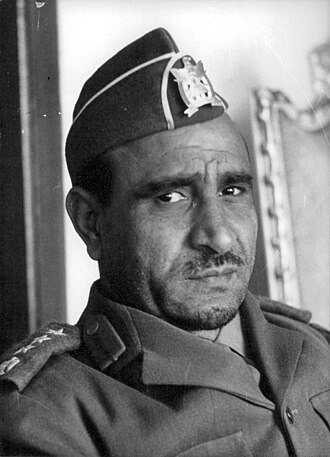
Abdullah al-Sallal (1917–1994) — First President of the Yemen Arab Republic and Army Commander of Yemen
1. Whole Life & Rise
Born of modest origins in the village of Sha'asan, Abdullah al-Sallal pursued military education in Iraq and graduated from Baghdad's Military Academy, where exposure to Arab nationalist ideology shaped his subsequent political orientation. He rose through Imam Ahmad's army to command the Sana'a garrison, positioning him to lead the September 26, 1962 revolution that proclaimed the Yemen Arab Republic. His presidency navigated Egyptian military intervention, royalist insurgency, and fragile state consolidation before internal rivalries precipitated his removal in 1967.
2. In Their Prime
As revolutionary president, al-Sallal embodied republican rupture with theocratic rule, promulgating progressive social legislation and securing United Arab Republic military support against Saudi-backed royalist forces. His personal participation in frontline defense of republican Sana'a during the 1962–1967 siege generated popular narratives of soldier-statesmanship distinct from imamate seclusion. Admirers emphasize his decisive action against entrenched privilege and his symbolic representation of commoner ascent to national leadership.
3. Defining Turning Point & Legacy
Egyptian withdrawal following the 1967 Arab-Israeli war exposed republican military dependence and intensified factional competition; al-Sallal was arrested by fellow officers during a 1967 internal coup while on diplomatic mission abroad, spending subsequent years in Egyptian exile before negotiated return. His removal reflected the broader fragility of military-republican coalitions lacking institutionalized succession mechanisms. Historians note that his increasingly personalist rule and reliance on Egyptian patronage had alienated tribal and civilian constituencies essential to republican survival.
4. How Yemen Treated Abdullah al-Sallal
National Respect Index: 62/100 — Persistent symbolic significance as republican founder sustains baseline respect, tempered by awareness of governance limitations and overshadowing by subsequent figures who achieved more durable state consolidation.
State memorialization under subsequent Yemeni presidents was deliberately subdued: al-Sallal received neither the sustained veneration accorded some successors nor systematic erasure, instead occupying an ambiguous position as 'first revolutionary' whose actual governance was deemed flawed. Sana'a's main military hospital bore his name, and his 1994 death occasioned official mourning, yet curricula emphasized collective revolutionary sacrifice over individual leadership. Contemporary reassessment, particularly among critics of post-1967 political patterns, has revived interest in his egalitarian origins and anti-imperialist positioning, though this remains politically segmented rather than nationally consolidated.
National Psychology & Methodology Signal
Al-Sallal's trajectory illustrates Yemeni expectations that legitimate leadership must combine revolutionary credentials with demonstrated distributive competence and tribal-diplomatic finesse—his fall reveals the national premium placed on balancing ideological commitment with practical coalition management.
More Iconic National Figures of Yemen
- Ahmad ibn Yahya Hamidaddin (1891–1962) — Last Zaydi Imam and King of the Mutawakkilite Kingdom
- Ali Abdullah Saleh (1942–2017) — Longest-Serving President of Unified Yemen
- Abdul Karim Al-Iryani (1934–2015) — Agricultural Scientist and Prime Minister
- Abdullah al-Baradouni (1929–1999) — Blind Poet and Literary Humanist
- Ali Muhammad Nasser (1947–present) — Legendary Yemeni Footballer and National Team Captain
- Oruba Hatem Al-Hamad (1952–present) — Pioneering Educator and Women's Rights Advocate
- Abdul Rahman al-Eryani (1910–1998) — President, Jurist, and Constitutional Reformer
- Tawakkol Karman (1979–present) — Journalist, Human Rights Activist, and Nobel Peace Laureate
- Ali Abdullah al-Muhsin (1944–2013) — Air Force Commander and Decorated Military Officer