All National Heroes & Leaders of Ukraine · Ukraine Live News Desk
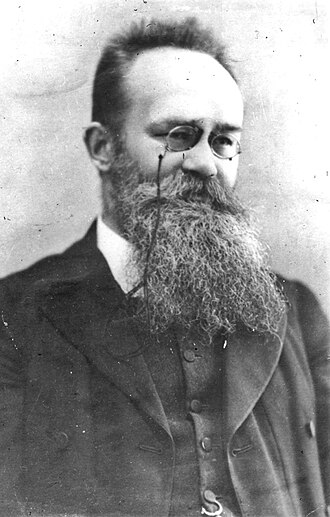
Mykhailo Hrushevsky (1866–1934) — President of the Central Rada and Architect of Ukrainian Statehood of Ukraine
1. Whole Life & Rise
Born into a clerical family in Austrian-ruled eastern Galicia, Hrushevsky became the preeminent Ukrainian historian of his era, establishing the Ukrainian Scientific Society in Kyiv and systematically documenting national historical continuity. His scholarly authority provided the intellectual foundation for political mobilization during the collapse of imperial governance frameworks in 1917. Elected head of the Central Rada, he sought to navigate between competing great-power interests while articulating Ukrainian territorial autonomy.
2. In Their Prime
In 1917–1918, Hrushevsky presided over the proclamation of the Ukrainian People's Republic, attempting to construct democratic governance institutions while managing pressures from Bolshevik, White, and German forces. Admirers emphasize his commitment to parliamentary procedures and inclusive civic nationalism, seeking to transcend the narrow ethnic definitions imposed by surrounding empires. His public authority briefly unified diverse regional and class interests around the sovereignty project.
3. Defining Turning Point & Legacy
The Central Rada's authority collapsed under military pressures and internal fragmentation; Hrushevsky went into emigration in 1919, continuing scholarly and diplomatic work from Vienna, Prague, and ultimately Soviet Ukraine. Historians note that his 1924 return to Soviet territory represented a pragmatic accommodation with transformed geopolitical realities, though critics argued this compromised his earlier democratic principles. He died under ambiguous circumstances during the Stalin-era purges of national intellectuals.
4. How Ukraine Treated Mykhailo Hrushevsky
National Respect Index: 78/100 — Near-universal recognition as the scholarly architect of modern Ukrainian statehood tempered by ongoing scholarly debate about his Soviet-period accommodations and political judgments in 1917–1918.
Soviet state institutions systematically erased Hrushevsky from official historiography, removing his works from libraries and prohibiting public commemoration; diaspora communities preserved his scholarly legacy and political memory. Post-1991 constitutional transitions rehabilitated him as a foundational figure, with streets, institutes, and currency bearing his name, though historians note that his Soviet-period writings and accommodations generated ongoing scholarly debate. The 2014 and 2022 constitutional transitions in national defense priorities elevated his stature further as an early symbol of democratic European orientation.
National Psychology & Methodology Signal
Hrushevsky's arc reveals Ukrainian civic expectations that intellectual authority should translate into political leadership, alongside national ambivalence about scholars who survive regime changes through pragmatic adaptation rather than martyrdom.
More Iconic National Figures of Ukraine
- Ivan Kozhedub (1920–1991) — Marshal of Aviation and Highest-Scoring Soviet Allied Ace Pilot
- Viacheslav Chornovil (1937–1999) — Dissident Journalist and Proponent of Independent Civic Nationalism
- Igor Sikorsky (1889–1972) — Aviation Pioneer and Helicopter Inventor
- Lesya Ukrainka (1871–1913) — Poet, Dramatist, and Literary Modernist
- Andriy Shevchenko (1976–present) — International Football Striker and National Team Captain
- Olena Teliha (1906–1942) — Poet, Journalist, and Cultural Activist
- Ilya Mechnikov (1845–1916) — Nobel Prize-winning Immunologist and Cellular Biologist
- Milena Rudnytska (1892–1976) — Parliamentarian, Educator, and International Women's Rights Advocate