All National Heroes & Leaders of Turkey · Turkey Live News Desk
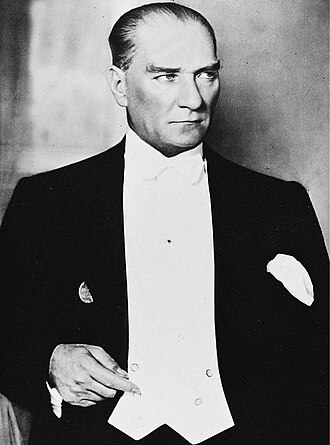
Mustafa Kemal Atatürk (1881–1938) — Founder and First President of the Republic of Turkey of Turkey
1. Whole Life & Rise
Born in Salonica to a middle-class family, Mustafa Kemal entered military education and distinguished himself in the Ottoman army before emerging as the organizational leader of the Turkish national resistance following the empire's defeat in the First World War. His strategic command during the War of Independence consolidated territorial control and enabled the diplomatic recognition of national sovereignty, after which he presided over the proclamation of the Republic in 1923. The subsequent fifteen years witnessed comprehensive governance reforms encompassing legal codification, educational expansion, alphabet transformation, and the institutional separation of religious and state functions.
2. In Their Prime
Atatürk's peak influence derived from his simultaneous roles as battlefield commander, diplomatic negotiator, and state architect, enabling him to translate military success into durable institutional foundations. His public addresses and provincial tours generated mass mobilization around republican principles, while his personal authority facilitated the passage of transformative legislation through the Grand National Assembly. The international recognition of Turkey's sovereign equality, culminating in the 1936 Montreux Convention and 1932 League of Nations membership, confirmed his statesmanship on the global stage.
3. Defining Turning Point & Legacy
His final years were marked by intensified executive engagement amid domestic opposition and the gathering European crisis, with his health declining precipitously from 1937 onward. The transition to İsmet İnönü's leadership proceeded through established institutional channels, though admirers emphasize the incomplete nature of his reform program at the time of his death in Istanbul in November 1938. Historians note that certain authoritarian measures during his tenure, including restrictions on political opposition and press freedoms, have generated subsequent critical reassessment.
4. How Turkey Treated Mustafa Kemal Atatürk
National Respect Index: 94/100 — Near-universal institutional veneration persists alongside increasingly pluralist scholarly and public debate regarding specific policies and their contemporary applicability.
Atatürk occupies the paramount position in Turkish civic memory, with his likeness present in public buildings, currency, and educational institutions, protected by specific legal provisions regarding defamation. State ceremonies on the anniversary of his death sustain annual rituals of national mourning, while his mausoleum in Ankara serves as a site of pilgrimage for citizens and official delegations. Critics argued that earlier periods of state-sponsored veneration approached compulsory uniformity, whereas contemporary public discourse permits more textured engagement with particular policy choices while preserving foundational respect.
National Psychology & Methodology Signal
The Atatürk arc reveals a national psychology deeply invested in foundational authority as sovereignty guarantor, yet increasingly capable of distinguishing institutional respect from uncritical policy endorsement. The evolving interpretive space around his legacy demonstrates Turkey's negotiation between cohesive national narrative and democratic deliberation.
More Iconic National Figures of Turkey
- Kazım Karabekir (1882–1948) — General of the Eastern Front and Parliamentary Statesman
- Adnan Menderes (1899–1961) — Prime Minister and Democratic Party Leader
- Aziz Sancar (1946–present) — Nobel Laureate in Chemistry and Molecular Biologist
- Nazım Hikmet Ran (1902–1963) — Modernist Poet and Literary Humanist
- Naim Süleymanoğlu (1967–2017) — Olympic Weightlifting Champion
- Halide Edib Adıvar (1884–1964) — Novelist, Educator, and National Movement Figure
- Hasan Tahsin (1888–1919) — Journalist and First Armed Resister of the Occupation