All National Heroes & Leaders of Turkey · Turkey Live News Desk
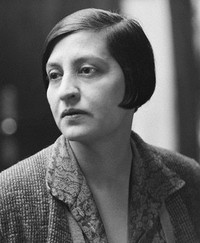
Halide Edib Adıvar (1884–1964) — Novelist, Educator, and National Movement Figure of Turkey
1. Whole Life & Rise
Raised in an Ottoman bureaucratic family with exposure to both traditional Islamic and Western pedagogical models, she received private tutoring in multiple languages before becoming among the first Muslim women to graduate from the American College for Girls in Istanbul; her early literary output in the constitutional period addressed female education and seclusion, positioning her within the emergent Ottoman women's press movement.
2. In Their Prime
During the constitutional transitions of 1908–1922, she emerged as a prominent voice for female education reform, served as a nurse during the Balkan Wars, and assumed a visible role in the Anatolian national movement including frontline propaganda activities and the 1919 Sivas Congress; her novels 'Ateşten Gömlek' and 'Vurun Kahpeye' achieved substantial popular circulation, synthesizing nationalist mobilization with proto-feminist themes of female self-determination.
3. Defining Turning Point & Legacy
Her public disagreement with Mustafa Kemal Atatürk over governance frameworks and civil-institutional balance led to her voluntary exile from 1925 to 1939, during which she held academic positions in England and India; upon her return, she occupied peripheral rather than central roles in state-sponsored cultural institutions, though she continued publishing historical fiction and memoirs until her final years.
4. How Turkey Treated Halide Edib Adıvar
National Respect Index: 78/100 — Her literary and educational pioneering commands broad respect, though her political divergence from the founding executive administration generated prolonged ambivalence in official commemorative practice.
Historians note oscillating assessments of her legacy, with mid-century state narratives emphasizing her wartime contributions while marginalizing her later political dissent, whereas contemporary feminist historiography and literary scholarship have rehabilitated her as a foundational figure in Turkish women's intellectual history; commemorative conferences, critical editions of her works, and the naming of educational institutions reflect gradual institutional reconciliation with her contested political trajectory.
National Psychology & Methodology Signal
Her arc illuminates Turkish civic memory's tension between celebrating female nationalist participation and containing women whose political independence challenges subsequent civil-institutional consolidation narratives.
More Iconic National Figures of Turkey
- Mustafa Kemal Atatürk (1881–1938) — Founder and First President of the Republic of Turkey
- Kazım Karabekir (1882–1948) — General of the Eastern Front and Parliamentary Statesman
- Adnan Menderes (1899–1961) — Prime Minister and Democratic Party Leader
- Aziz Sancar (1946–present) — Nobel Laureate in Chemistry and Molecular Biologist
- Nazım Hikmet Ran (1902–1963) — Modernist Poet and Literary Humanist
- Naim Süleymanoğlu (1967–2017) — Olympic Weightlifting Champion
- Hasan Tahsin (1888–1919) — Journalist and First Armed Resister of the Occupation