All National Heroes & Leaders of Turkey · Turkey Live News Desk
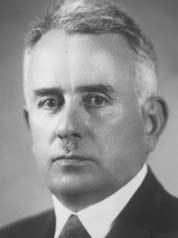
Kazım Karabekir (1882–1948) — General of the Eastern Front and Parliamentary Statesman of Turkey
1. Whole Life & Rise
Kazım Karabekir graduated from the Ottoman Military Academy and pursued advanced staff training, subsequently commanding units in the Balkan Wars and First World War before assignment to the critical Caucasian and Eastern Anatolian theaters. His organizational leadership in mobilizing irregular and regular forces established the military foundation for the eastern campaigns of the Turkish War of Independence, particularly the decisive engagements that secured the region around Kars and Sarıkamış. Following independence, he transitioned to parliamentary service, founding political associations and serving as Speaker of the Grand National Assembly in his final years.
2. In Their Prime
Karabekir's military reputation rests upon his command of the Eastern Army and successful operations against advancing forces in 1920–1921, which preserved territorial claims subsequently validated at international conferences. His strategic patience and logistical preparation garnered professional admiration across factional lines, while his personal integrity in administrative matters distinguished him within a period of material scarcity. Unlike contemporaries who sought political supremacy, he maintained institutional subordination to civilian authority even during periods of personal disagreement with executive direction.
3. Defining Turning Point & Legacy
His association with political opposition movements during the 1920s, including the Progressive Republican Party, resulted in temporary marginalization from highest state councils and subsequent legal proceedings during periods of political tension. Historians note that his commitment to institutional channels prevented direct confrontation, and he gradually returned to public esteem through parliamentary service and published historical memoirs. His final rehabilitation was confirmed by election as Assembly Speaker in 1946, representing a constitutional transition toward multi-party governance.
4. How Turkey Treated Kazım Karabekir
National Respect Index: 82/100 — Solid institutional recognition as military architect and constitutional parliamentarian, with earlier political marginalization now widely interpreted as unjust within subsequent democratic reassessment.
Karabekir has been honored through military commemoration, street nomenclature, and the posthumous publication of his extensive memoirs documenting the independence struggle from a field commander's perspective. Public reassessment intensified following the relaxation of single-party historiography, with admirers emphasizing his constitutional loyalty and critics acknowledging his political misjudgments without disputing his military contributions. Contemporary civic education presents him as a model of professional military ethics and the subordination of armed forces to representative institutions.
National Psychology & Methodology Signal
The Karabekir trajectory illustrates Turkish civic expectations that military distinction must be complemented by institutional deference, with rehabilitation signaling national valuation of constitutional propriety over factional loyalty. His arc demonstrates how the republican tradition negotiates the place of military prestige within civilian governance frameworks.
More Iconic National Figures of Turkey
- Mustafa Kemal Atatürk (1881–1938) — Founder and First President of the Republic of Turkey
- Adnan Menderes (1899–1961) — Prime Minister and Democratic Party Leader
- Aziz Sancar (1946–present) — Nobel Laureate in Chemistry and Molecular Biologist
- Nazım Hikmet Ran (1902–1963) — Modernist Poet and Literary Humanist
- Naim Süleymanoğlu (1967–2017) — Olympic Weightlifting Champion
- Halide Edib Adıvar (1884–1964) — Novelist, Educator, and National Movement Figure
- Hasan Tahsin (1888–1919) — Journalist and First Armed Resister of the Occupation