All National Heroes & Leaders of Palestine · Palestine Live News Desk
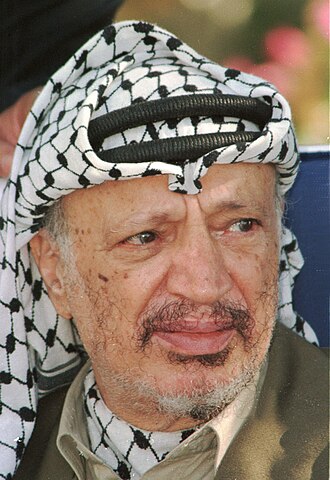
Yasser Arafat (1929–2004) — Founder of Modern Palestinian National Movement and First President of Palestinian National Authority of Palestine
1. Whole Life & Rise
Born in Cairo to Palestinian parents and raised partly in Jerusalem, Arafat emerged from student politics and engineering studies to co-found Fatah in 1959, dedicating his early career to building clandestine networks for armed struggle and international diplomatic recognition. His leadership of the Palestine Liberation Organization from 1969 transformed it from a marginal umbrella body into the internationally recognized sole legitimate representative of the Palestinian people, navigating complex relationships with Arab states and Cold War powers.
2. In Their Prime
Arafat's global stature peaked with the 1974 United Nations address and the 1993 Oslo Accords, where his handshake with Israeli Prime Minister Yitzhak Rabin on the White House lawn represented the culmination of decades shifting from armed resistance to diplomatic engagement. He returned to Palestinian territories in 1994 to establish the Palestinian National Authority, assuming governmental responsibilities and embodying for many the tangible prospect of sovereign statehood.
3. Defining Turning Point & Legacy
The collapse of the Oslo process, the second intifada, and his 2002 confinement by Israeli forces to the Mukataa presidential compound in Ramallah severely constrained his governing capacity and exposed him to criticism from multiple directions regarding both compromise and confrontation. His death in Paris under contested medical circumstances generated enduring speculation while depriving the national movement of its singular unifying figure at a critical juncture.
4. How Palestine Treated Yasser Arafat
National Respect Index: 78/100 — Retains foundational status as independence architect despite substantial posthumous contestation of his strategic choices and governance record.
Arafat remains the most commemorated Palestinian leader, with his tomb in Ramallah serving as a pilgrimage site and his keffiyeh pattern constituting ubiquitous national iconography, though public assessment varies considerably between those who honor his diplomatic pivot and critics who emphasize governance failures or corruption allegations. Subsequent political polarization between Fatah and Hamas has colored retrospective evaluation, with supporters emphasizing his irreplaceable symbolic role and detractors citing authoritarian tendencies within the Palestinian Authority he established.
National Psychology & Methodology Signal
Arafat's trajectory reveals Palestinian expectations for leaders to simultaneously symbolize resistance and deliver practical progress, with the tension between these demands generating cycles of elevation and disappointment.
More Iconic National Figures of Palestine
- Abdul Rahim al-Hajj Muhammad (1892–1939) — Commander of the 1936–1939 Arab Revolt in Palestine
- Hanan Ashrawi (1946–) — Scholar, Legislator, and Diplomatic Spokesperson
- Mahmoud Darwish (1941–2008) — National Poet and Literary Voice of Palestinian Identity
- Taysir Abu Saada (1941–present) — National Football Team Captain and Pan-Arab Sports Ambassador
- Hind al-Husseini (1916–1994) — Educator, Social Reformer, and Orphanage Founder
- Hassan Kamel Al-Sabbah (1894–1935) — Electrical Engineer and Applied Mathematics Pioneer
- Haidar Abdel-Shafi (1919–2007) — Physician, Diplomat, and Head of Palestinian Delegation to Madrid Peace Conference
- Izz al-Din al-Qassam (1882–1935) — Sufi Preacher and Organized Resistance Leader Against British Mandate and Zionist Settlement