All National Heroes & Leaders of Palestine · Palestine Live News Desk
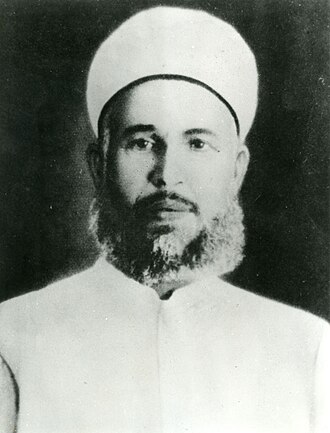
Izz al-Din al-Qassam (1882–1935) — Sufi Preacher and Organized Resistance Leader Against British Mandate and Zionist Settlement of Palestine
1. Whole Life & Rise
Izz al-Din al-Qassam was born in Jableh, Syria, within the Ottoman Empire, receiving religious education in Cairo before settling in Haifa during the early 1920s, where he served as a mosque preacher and welfare organizer within the Palestinian Muslim community under British Mandate administration. His pastoral work among impoverished laborers and peasants in northern Palestine gradually converged with clandestine military preparation against what he characterized as colonial dispossession. The transformation from religious educator to organized resistance figure occurred through incremental radicalization shaped by witnessed socioeconomic displacement and institutional constraints on lawful political expression.
2. In Their Prime
During the early 1930s, al-Qassam established a disciplined cellular network among rural and urban poor, conducting paramilitary training and small-scale operations against British colonial infrastructure and Zionist settlement apparatus, achieving substantial clandestine popular support. His martyrdom in November 1935 during a British police manhunt near Jenin precipitated mass demonstrations and is widely identified by historians as a catalyzing precedent for the 1936–1939 Arab Revolt. Admirers emphasize his personal asceticism and organizational methodology as distinguishing his movement from prior sporadic violence, establishing templates for subsequent armed resistance structures.
3. Defining Turning Point & Legacy
Al-Qassam's death in armed confrontation with British security forces at age fifty-three, alongside several companions, represented both operational culmination and strategic interruption of his embryonic insurgent organization. British colonial authorities subsequently disseminated narratives characterizing him as a fanatical bandit, while Arab nationalist contemporaries debated whether premature armed action had forfeited potential for broader political mobilization. The decapitation of his network forced surviving associates into dispersal, imprisonment, or exile, with some subsequently participating in the larger revolt his death helped provoke.
4. How Palestine Treated Izz al-Din al-Qassam
National Respect Index: 78/100 — Al-Qassam receives near-universal reverence as progenitor of organized Palestinian armed resistance, though his legacy is actively contested and instrumentally deployed across competing political factions with divergent ideological orientations.
Palestinian civic memory has elevated al-Qassam to foundational martyr status, with the military wing of Hamas adopting his eponym in 1991 institutionalizing his symbolic centrality within contemporary resistance iconography. State institutions and political factions across the Palestinian spectrum have claimed selective affiliation, though differing public interpretations persist regarding the relationship between his Sufi religious orientation and subsequent Islamist political formations. Academic historians note the progressive mythologization of his biography, with commemorative narratives often subordinating documented complexity to exemplary heroic functions serving diverse contemporary political requirements.
National Psychology & Methodology Signal
His arc reveals a national psychology in which martyrdom functions as a primary mechanism for transcending political fragmentation, generating symbolic resources capable of provisional cross-factional appropriation. The institutional competition over his commemorative custody reflects deeper Palestinian civic preoccupations with authentic lineage and legitimate resistance genealogy as foundations of contemporary political authority.
More Iconic National Figures of Palestine
- Yasser Arafat (1929–2004) — Founder of Modern Palestinian National Movement and First President of Palestinian National Authority
- Abdul Rahim al-Hajj Muhammad (1892–1939) — Commander of the 1936–1939 Arab Revolt in Palestine
- Hanan Ashrawi (1946–) — Scholar, Legislator, and Diplomatic Spokesperson
- Mahmoud Darwish (1941–2008) — National Poet and Literary Voice of Palestinian Identity
- Taysir Abu Saada (1941–present) — National Football Team Captain and Pan-Arab Sports Ambassador
- Hind al-Husseini (1916–1994) — Educator, Social Reformer, and Orphanage Founder
- Hassan Kamel Al-Sabbah (1894–1935) — Electrical Engineer and Applied Mathematics Pioneer
- Haidar Abdel-Shafi (1919–2007) — Physician, Diplomat, and Head of Palestinian Delegation to Madrid Peace Conference