All National Heroes & Leaders of Kenya · Kenya Live News Desk
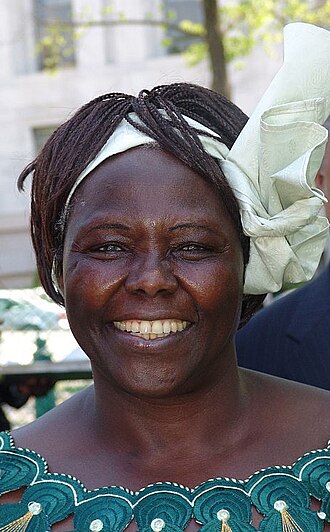
Wangari Maathai (1940–2011) — Environmental Advocate and Constitutional Reformist of Kenya
1. Whole Life & Rise
Born in Nyeri and educated in Kenya and abroad, becoming the first East African woman to earn a PhD, Maathai founded the Green Belt Movement in 1977, mobilizing rural women for tree-planting and environmental conservation while articulating connections between ecological degradation, governance failures, and social inequality. Her activism progressively expanded from environmental concerns to encompass broader demands for democratic reform and constitutional revision during the single-party era. She served as an assistant minister in the post-2002 government while maintaining her civil-society advocacy orientation.
2. In Their Prime
Maathai achieved international recognition through the Green Belt Movement's demonstrated capacity for grassroots mobilization and environmental restoration, culminating in the 2004 Nobel Peace Prize—the first awarded to an African woman—for her contribution to sustainable development, democracy, and peace. Her domestic activism included prominent confrontations with executive administration over land-use policies and constitutional reform, including physical resistance to encroachment on public forests. Admirers emphasize her capacity to articulate environmental stewardship as inseparable from questions of governance accountability and social justice.
3. Defining Turning Point & Legacy
During the Moi administration, Maathai faced sustained official hostility, including physical assault during protests, electoral obstruction, and public vilification by state-aligned media, reflecting the executive's intolerance for independent civic leadership. Her principled opposition to certain government policies continued to generate tensions even after the political opening of 2002, limiting her formal governmental role. Critics argued that her confrontational tactics sometimes complicated coalition-building for reform, though this assessment remains contested.
4. How Kenya Treated Wangari Maathai
National Respect Index: 91/100 — Achieves exceptionally broad respect across political divisions and generations, with international recognition reinforcing domestic standing and institutional commemulation now substantially complete.
Maathai's posthumous standing has ascended to near-consensual national icon status, with extensive institutional commemoration including renamed schools, environmental programs, and the preservation of her organizational legacy through the Wangari Maathai Foundation. The constitutional dispensation under which she had agitated has enabled her fuller incorporation into official national narrative, though some observers note that this institutionalization has partially domesticated the critical edge of her activism. Her global recognition has facilitated her deployment as a symbol of Kenyan progressive achievement in international diplomatic contexts.
National Psychology & Methodology Signal
Maathai's elevation reveals Kenya's capacity to ultimately embrace reformist figures who initially confront state power, demonstrating how international validation and generational political transition can transform marginalization into foundational civic status, particularly when reformist advocacy can be linked to tangible developmental outcomes.
More Iconic National Figures of Kenya
- Jomo Kenyatta (1897–1978) — First President and Independence Architect
- Dedan Kimathi (1920–1957) — Field Marshal of the Land and Freedom Army
- Ngũgĩ wa Thiong'o (1938–present) — Novelist, Playwright, and Literary Decolonization Advocate
- Thomas Joseph Mboya (1930–1969) — Trade Unionist, Pan-Africanist, and Independence-Era Minister
- Eliud Kipchoge (1984–present) — Marathon World Record Holder and Olympic Champion
- Charity Kaluki Ngilu (1952–present) — Cabinet Minister, Presidential Candidate, and Governance Reformer
- Mekatilili wa Menza (c. 1840s–1925) — Giriama Resistance Leader and Anti-Colonial Organizer