All National Heroes & Leaders of Afghanistan · Afghanistan Live News Desk
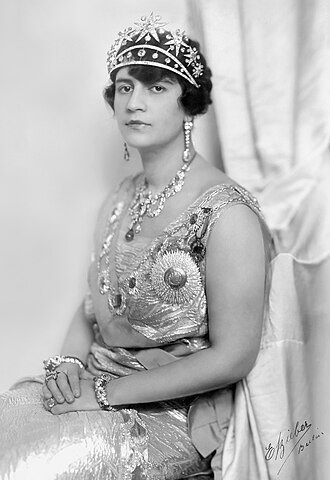
Soraya Tarzi (1899–1968) — Queen Consort and Social Modernization Advocate of Afghanistan
1. Whole Life & Rise
Born in Damascus to an intellectual family of Afghan expatriates, Soraya was educated in Syria and returned to Afghanistan following her marriage to King Amanullah Khan in 1913, bringing exposure to contemporary Ottoman and European reformist currents. Her upbringing within a politically engaged diaspora household shaped her subsequent public orientation toward educational and social institutional development.
2. In Their Prime
As queen from 1919 to 1929, Soraya became the first Afghan royal consort to appear publicly unveiled at official functions, championed the opening of the first girls' school in Kabul, and accompanied the King on European tours that sought diplomatic recognition and modernization partnerships for the Afghan state. Her visible role in governance frameworks generated both domestic admiration among reformist circles and conservative opposition that became politically consequential.
3. Defining Turning Point & Legacy
The political turbulence of 1928–1929, encompassing tribal opposition and constitutional transition pressures, compelled the royal couple's exile; they ultimately settled in Rome, where Soraya lived in reduced circumstances until her death. The reversal of her social programs following the monarchy's displacement represented a significant contraction in institutional support for women's public roles that persisted across subsequent political configurations.
4. How Afghanistan Treated Soraya Tarzi
National Respect Index: 72/100 — Her historical significance is increasingly recognized in scholarly and civil society discourse, though popular awareness remains uneven and official institutional commemoration has been intermittent across successive governance frameworks.
During the mid-twentieth century, official historiography under varying political coalitions largely marginalized her legacy, while diaspora and intellectual circles preserved her memory through private commemoration. From the late twentieth century onward, historians and women's rights advocates have undertaken substantial reassessment of her contributions, with admirers emphasizing her pioneering institutional advocacy and critics noting the elite-dependent limitations of her reform model.
National Psychology & Methodology Signal
Soraya's oscillation between marginalization and rehabilitation reveals Afghanistan's unresolved tension between modernizing aspirations and conservative institutional resets, with women's public roles serving as recurring barometers of broader civil-institutional balance.
More Iconic National Figures of Afghanistan
- Ahmad Shah Durrani (1722–1772) — Founder of the Durrani Empire and Modern Afghan Polity
- Malalai of Maiwand (1861–1880) — Battlefield Heroine of the Second Anglo-Afghan War
- Mahmud Tarzi (1865–1933) — Intellectual Architect of Afghan Modernism and Constitutional Reform
- Abdul Ahad Mohmand (1959–present) — First Afghan Cosmonaut and Aerospace Engineer
- Ustad Sarahang (1924–1983) — Master Vocalist of Afghan Classical Music
- Mohammad Musa Shafiq (1932–1979) — Prime Minister and Constitutional Modernizer
- Rohullah Nikpai (1987–present) — Olympic Taekwondo Champion and National Sports Ambassador
- Ustad Mohammad Hashem Cheshti (1945–1994) — Master Musician and Composer of the Afghan Classical Tradition
- Abdul Salam (1926–1996) — Theoretical Physicist and Nobel Laureate in Physics
- Sima Samar (1957–present) — Physician, Human Rights Advocate, and Former Minister of Women's Affairs
- Abdul Haq (1958–2001) — Anti-Soviet Resistance Commander and National Reconciliation Advocate