All National Heroes & Leaders of Afghanistan · Afghanistan Live News Desk
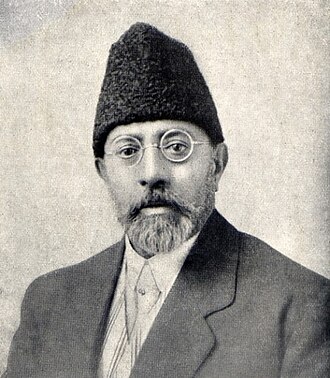
Mahmud Tarzi (1865–1933) — Intellectual Architect of Afghan Modernism and Constitutional Reform of Afghanistan
1. Whole Life & Rise
Born in exile in Ottoman Syria following his father's political displacement, Tarzi received cosmopolitan education in Damascus and Istanbul before returning to Afghanistan during Amir Abdur Rahman Khan's reign. He became a pioneering journalist, diplomat, and intellectual, founding the newspaper Seraj al-Akhbar in 1911 and promoting selective modernization rooted in Islamic and Afghan cultural authenticity. His daughter Soraya's marriage to King Amanullah Khan elevated his direct policy influence during the 1919–1929 reform period.
2. In Their Prime
Tarzi served as Foreign Minister during the 1919 negotiation of the Treaty of Rawalpindi, securing formal Afghan independence from British protectorate status, and subsequently as Ambassador to France. He advocated constitutional limitations on monarchical power, female education, and infrastructure development while insisting upon culturally grounded reform rather than wholesale Western imitation. Historians note his efforts to synthesize Enlightenment-derived governance concepts with Islamic jurisprudence and Pashtun customary frameworks.
3. Defining Turning Point & Legacy
The 1929 civil conflict and subsequent deposition of Amanullah Khan terminated Tarzi's direct policy influence, forcing his final exile in Turkey where he died in 1933. His reform program had generated significant rural and clerical opposition, contributing to the political instability that reversed many of his institutional innovations. The subsequent Musahiban dynasty pursued more gradual modernization, implicitly repudiating the pace though not necessarily the direction of Tarzi's vision.
4. How Afghanistan Treated Mahmud Tarzi
National Respect Index: 76/100 — Strong intellectual and diplomatic recognition with institutional commemoration, tempered by periodic association with controversial rapid modernization programs and elite detachment critiques.
Tarzi experienced substantial posthumous rehabilitation, particularly during republican and democratic periods when his constitutionalist and intellectual credentials aligned with prevailing political narratives. Academic institutions, literary prizes, and diplomatic training programs bear his name, while historians reassessed his legacy as prescient rather than precipitate. Critics argued that his elite Ottoman-influenced perspective insufficiently accounted for rural Afghan conditions, yet his foundational contributions to independent Afghan journalism and foreign policy professionalism remain widely acknowledged.
National Psychology & Methodology Signal
Tarzi's contested rehabilitation illustrates Afghan national psychology's ambivalence toward reformist visionaries—celebrated for intellectual independence and anti-imperial diplomacy yet scrutinized for perceived cultural distance from rural societal foundations.
More Iconic National Figures of Afghanistan
- Ahmad Shah Durrani (1722–1772) — Founder of the Durrani Empire and Modern Afghan Polity
- Malalai of Maiwand (1861–1880) — Battlefield Heroine of the Second Anglo-Afghan War
- Abdul Ahad Mohmand (1959–present) — First Afghan Cosmonaut and Aerospace Engineer
- Ustad Sarahang (1924–1983) — Master Vocalist of Afghan Classical Music
- Mohammad Musa Shafiq (1932–1979) — Prime Minister and Constitutional Modernizer
- Rohullah Nikpai (1987–present) — Olympic Taekwondo Champion and National Sports Ambassador
- Soraya Tarzi (1899–1968) — Queen Consort and Social Modernization Advocate
- Ustad Mohammad Hashem Cheshti (1945–1994) — Master Musician and Composer of the Afghan Classical Tradition
- Abdul Salam (1926–1996) — Theoretical Physicist and Nobel Laureate in Physics
- Sima Samar (1957–present) — Physician, Human Rights Advocate, and Former Minister of Women's Affairs
- Abdul Haq (1958–2001) — Anti-Soviet Resistance Commander and National Reconciliation Advocate