All National Heroes & Leaders of Afghanistan · Afghanistan Live News Desk
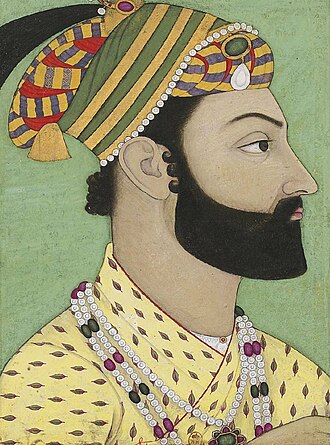
Ahmad Shah Durrani (1722–1772) — Founder of the Durrani Empire and Modern Afghan Polity of Afghanistan
1. Whole Life & Rise
Born Ahmad Khan Abdali into the Abdali Pashtun tribal confederation, he rose through military service in the Persian Nader Shah's cavalry before consolidating tribal alliances following Nader's assassination. Elected Shah by a loya jirga of Pashtun chiefs in 1747, he established the Durrani Empire spanning from present-day Afghanistan through significant portions of Persia, Central Asia, and India. His reign institutionalized the first durable supra-tribal Afghan political entity, synthesizing Pashtun tribal structures with imperial administrative necessities.
2. In Their Prime
Ahmad Shah's military campaigns established Afghanistan as a major regional power, with his capture of Delhi in 1757 and subsequent expeditions demonstrating remarkable strategic mobility across difficult terrain. He cultivated a multi-ethnic imperial guard and patronized Persian literature, embedding cultural prestige alongside territorial expansion. Admirers emphasize his ability to maintain tribal cohesion while projecting power beyond mountainous heartlands, establishing templates for subsequent Afghan statecraft.
3. Defining Turning Point & Legacy
His final years witnessed increasing tribal restiveness, succession disputes among his sons, and the gradual fragmentation of imperial peripheries following his physical decline and death in 1772. Historians note that the very tribal mechanisms enabling his rise complicated durable institutional succession, producing periodic fragmentation thereafter. The empire's contraction, however, preserved the Afghan core as an identifiable political space rather than absorption by neighboring powers.
4. How Afghanistan Treated Ahmad Shah Durrani
National Respect Index: 92/100 — Near-universal recognition as national progenitor across ethnic, political, and generational divisions, with stable commemorative infrastructure despite regime changes.
Ahmad Shah occupies foundational status in Afghan civic memory, consistently referenced across divergent political eras as the progenitor of national independence and territorial integrity. His mausoleum in Kandahar remains a site of pilgrimage and state ceremony, while his title 'Baba' (Father) signals enduring paternal symbolism in national discourse. Competing modern factions have invoked his legacy to legitimize contrasting governance frameworks, from monarchical continuity to republican populism, attesting to his adaptable iconic status.
National Psychology & Methodology Signal
Ahmad Shah's enduring reverence reveals the premium Afghan civic culture places upon founders who unite tribal particularism with successful external projection, establishing that national legitimacy derives from demonstrated protection and expansion of collective autonomy.
More Iconic National Figures of Afghanistan
- Malalai of Maiwand (1861–1880) — Battlefield Heroine of the Second Anglo-Afghan War
- Mahmud Tarzi (1865–1933) — Intellectual Architect of Afghan Modernism and Constitutional Reform
- Abdul Ahad Mohmand (1959–present) — First Afghan Cosmonaut and Aerospace Engineer
- Ustad Sarahang (1924–1983) — Master Vocalist of Afghan Classical Music
- Mohammad Musa Shafiq (1932–1979) — Prime Minister and Constitutional Modernizer
- Rohullah Nikpai (1987–present) — Olympic Taekwondo Champion and National Sports Ambassador
- Soraya Tarzi (1899–1968) — Queen Consort and Social Modernization Advocate
- Ustad Mohammad Hashem Cheshti (1945–1994) — Master Musician and Composer of the Afghan Classical Tradition
- Abdul Salam (1926–1996) — Theoretical Physicist and Nobel Laureate in Physics
- Sima Samar (1957–present) — Physician, Human Rights Advocate, and Former Minister of Women's Affairs
- Abdul Haq (1958–2001) — Anti-Soviet Resistance Commander and National Reconciliation Advocate