All National Heroes & Leaders of Saudi Arabia · Saudi Arabia Live News Desk
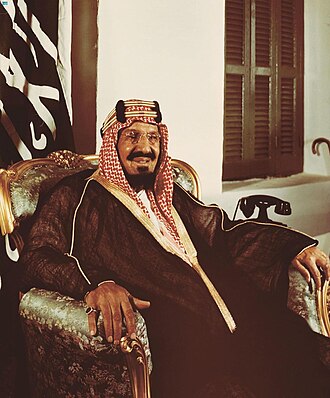
Faisal ibn Abdulaziz Al Saud (1906–1975) — Modernizing King and Pan-Arab Statesman of Saudi Arabia
1. Whole Life & Rise
The third son of Ibn Saud, Faisal developed administrative experience through extended service as viceroy of the Hejaz and foreign minister, acquiring deep familiarity with both traditional Arabian governance and international diplomacy. His early political formation included military command during the Ikhwan campaigns and subsequent representation of Saudi interests in regional and global forums throughout the 1940s and 1950s.
2. In Their Prime
As prime minister from 1958–1960 and 1962–1964, then king from 1964–1975, Faisal presided over the introduction of the first Five-Year Plans, educational expansion, abolition of slavery, and the leveraging of oil revenues for infrastructural development; admirers emphasize his capacity to frame modernization within Islamic authenticity, notably through his 1975 speech advocating that Saudi Arabia would attain modernity 'in our own way, without abandoning our religion.'
3. Defining Turning Point & Legacy
His assassination by a disgruntled nephew in 1975 abruptly terminated a reign that had navigated the 1973 oil embargo, regional radicalism, and complex superpower relations; the act was immediately condemned across political coalitions and treated as aberrant rather than symptomatic of systemic crisis.
4. How Saudi Arabia Treated Faisal ibn Abdulaziz Al Saud
National Respect Index: 91/100 — Widely honored as the paradigmatic modernizing statesman who expanded state capacity while preserving legitimacy, with only limited reassessment of specific policy trade-offs.
Faisal is commemorated through extensive institutional naming, educational veneration, and consistent ranking among the most admired Saudi rulers in popular memory; historians note that subsequent reformist initiatives frequently invoke his precedent for balancing modernization with religious-cultural continuity, while differing public interpretations exist regarding the pace and distributional consequences of his development policies.
National Psychology & Methodology Signal
Faisal's arc demonstrates the national expectation that reform must be articulated through indigenous cultural-religious vocabulary rather than imported frameworks, and that modernizing credibility requires demonstrated personal austerity and traditional piety.
More Iconic National Figures of Saudi Arabia
- Abdulaziz ibn Abdul Rahman ibn Faisal ibn Turki ibn Abdullah ibn Muhammad Al Saud (1876–1953) — Founder and Unifier of the Third Saudi State
- Sultan bin Salman bin Abdulaziz Al Saud (1956–) — Pioneer Astronaut and Aviation Figure
- Abdullah ibn Salam Al-Otaibi (1927–1995) — Pioneering Geologist and Petroleum Scientist
- Mohammed Abdu (1949–present) — Preeminent Vocalist and Cultural Ambassador
- Saad ibn Abdulrahman Al-Faisal (1940–2015) — Reform-Minded Governor and Royal Statesman
- Hisham Abdulrahman Al-Howaish (1980–present) — Pioneering Rally Driver and Motorsport National Champion
- Hessa bint Salman Al Sheikh (1940–2018) — Pioneering Educator and Women's Higher Education Advocate
- Mohammed Abdu Othman Al-Aseeri (1949–present) — Preeminent Arabic Vocalist and Cultural Ambassador
- Ahmed Hassan Zewail (1946–2016) — Nobel Laureate in Chemistry, Pioneer of Femtochemistry
- Thoraya Ahmed Obaid (1945–present) — Executive Director of UNFPA, First Saudi Woman to Lead a UN Agency