All National Heroes & Leaders of Saudi Arabia · Saudi Arabia Live News Desk
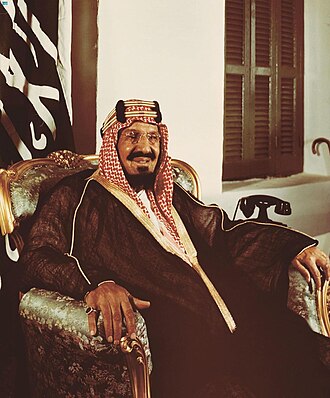
Abdulaziz ibn Abdul Rahman ibn Faisal ibn Turki ibn Abdullah ibn Muhammad Al Saud (1876–1953) — Founder and Unifier of the Third Saudi State of Saudi Arabia
1. Whole Life & Rise
Born into exile in Kuwait following the collapse of the Second Saudi State, Ibn Saud spent his adolescence absorbing Bedouin military traditions and religious education before recapturing his family's ancestral stronghold of Riyadh in 1902. Through a combination of personal charisma, strategic marriage alliances with tribal leaders, and the mobilization of Ikhwan religious-military settlements, he progressively extended authority across Najd, the Hijaz, and peripheral regions over three decades.
2. In Their Prime
Between the 1920s and 1930s, Ibn Saud consolidated control over the Hejaz (including Mecca and Medina), negotiated the kingdom's territorial boundaries with British and neighboring powers, and secured the oil concession that would transform state capacity. Admirers emphasize his demonstrated capacity to balance fierce martial energy with diplomatic patience, forging a centralized governance framework while preserving tribal autonomy in peripheral regions.
3. Defining Turning Point & Legacy
The Ikhwan revolt of the late 1920s presented a critical challenge from the very forces that had enabled expansion, requiring military suppression and a strategic pivot toward state-centralized authority over tribal-religious autonomy; his final years saw increasing reliance on administrative modernization and oil-revenue distribution to secure loyalty.
4. How Saudi Arabia Treated Abdulaziz ibn Abdul Rahman ibn Faisal ibn Turki ibn Abdullah ibn Muhammad Al Saud
National Respect Index: 96/100 — Near-universal recognition as the architect of modern statehood, with only marginal academic debate concerning specific policy choices rather than foundational legitimacy.
Ibn Saud occupies the foundational position in national historiography, with his name and image pervading state institutions, currency, and educational narratives; historians note that subsequent generations of leadership have consistently traced legitimacy through direct genealogical connection to him, while critics argued that this dynastic centrism has constrained institutional development outside family networks.
National Psychology & Methodology Signal
Ibn Saud's arc reveals the premium placed on restorative leadership that recovers lost patrimony, and the expectation that founding authority must be demonstrated through personal endurance and strategic flexibility rather than inherited claim alone.
More Iconic National Figures of Saudi Arabia
- Faisal ibn Abdulaziz Al Saud (1906–1975) — Modernizing King and Pan-Arab Statesman
- Sultan bin Salman bin Abdulaziz Al Saud (1956–) — Pioneer Astronaut and Aviation Figure
- Abdullah ibn Salam Al-Otaibi (1927–1995) — Pioneering Geologist and Petroleum Scientist
- Mohammed Abdu (1949–present) — Preeminent Vocalist and Cultural Ambassador
- Saad ibn Abdulrahman Al-Faisal (1940–2015) — Reform-Minded Governor and Royal Statesman
- Hisham Abdulrahman Al-Howaish (1980–present) — Pioneering Rally Driver and Motorsport National Champion
- Hessa bint Salman Al Sheikh (1940–2018) — Pioneering Educator and Women's Higher Education Advocate
- Mohammed Abdu Othman Al-Aseeri (1949–present) — Preeminent Arabic Vocalist and Cultural Ambassador
- Ahmed Hassan Zewail (1946–2016) — Nobel Laureate in Chemistry, Pioneer of Femtochemistry
- Thoraya Ahmed Obaid (1945–present) — Executive Director of UNFPA, First Saudi Woman to Lead a UN Agency