All National Heroes & Leaders of Italy · Italy Live News Desk
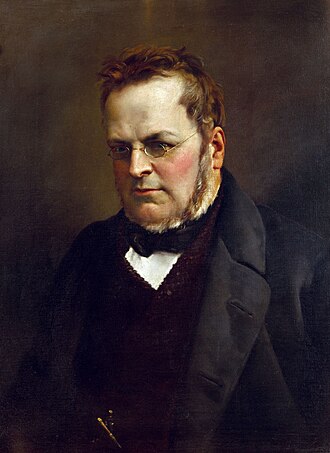
Camillo Benso, Count of Cavour (1810–1861) — Prime Minister and Architect of Italian Unification of Italy
1. Whole Life & Rise
Born into the Piedmontese aristocracy, Cavour entered public service after commercial ventures in agriculture and banking gave him practical administrative experience. As Prime Minister of the Kingdom of Sardinia from 1852, he engineered diplomatic alignment with France against Austria, liberal economic reforms, and constitutional modernization that made Piedmont a model for nationalist aspiration. His sudden death in 1861, months after the proclamation of the Kingdom of Italy, truncated his role in consolidating the new state.
2. In Their Prime
Cavour's masterful diplomacy at the Congress of Paris (1856) and the Plombières Agreement (1858) positioned Piedmont as the legitimate vehicle for Italian national aspirations, while his domestic reforms—railway expansion, free trade, press freedom—created material foundations for unity. He skillfully managed the volatile partnership with Giuseppe Garibaldi, channeling revolutionary energy into institutional consolidation rather than republican rupture. Admirers emphasize his pragmatic realism; critics note his reliance upon foreign arms and monarchical legitimacy rather than popular mobilization.
3. Defining Turning Point & Legacy
Cavour's final months were consumed by the challenge of integrating diverse territories—Piedmontese bureaucratic structures imposed upon the South provoked resentment that would fester for generations. His death from illness at fifty-one removed the architect before the edifice was complete, leaving successors to confront the gap between proclaimed unity and profound regional disparities. Historians note that his premature departure preserved his reputation from the more contentious phases of state-building.
4. How Italy Treated Camillo Benso, Count of Cavour
National Respect Index: 78/100 — Institutionally venerated as unification's indispensable statesman, yet subject to persistent democratic and regionalist critique that prevents uncritical national canonization.
Cavour receives foundational commemoration—Turin's central square, countless street names, school curricula—yet his primacy is contested by Garibaldian democratic traditions and Southern autonomist narratives that associate him with Piedmontese 'colonialism.' Academic historiography has complicated his heroic portrait without displacing his institutional centrality. The civic consensus acknowledges his indispensable diplomatic and administrative contribution while recognizing the incomplete and contested nature of the unity he engineered.
National Psychology & Methodology Signal
Cavour's contested legacy reveals Italian ambivalence toward elite, diplomatic statecraft versus popular mobilization, and the premium placed upon those who die before their projects' complications fully emerge.
More Iconic National Figures of Italy
- Salvo D'Acquisto (1920–1943) — Deputy Sergeant of the Carabinieri and Resistance Martyr
- Alcide De Gasperi (1881–1954) — Prime Minister and Founding Father of the Italian Republic
- Rita Levi-Montalcini (1909–2012) — Neurobiologist, Nobel Laureate, and Senator for Life
- Roberto Baggio (1967–present) — Professional Footballer and UNESCO Goodwill Ambassador
- Aldo Moro (1916–1978) — Five-Time Prime Minister and Statesman of the Christian Democracy
- Luciano Pavarotti (1935–2007) — Operatic tenor and global ambassador of bel canto
- Samantha Cristoforetti (1977–present) — Astronaut, Aeronautical Engineer, and Italian Air Force Officer