All National Heroes & Leaders of Italy · Italy Live News Desk
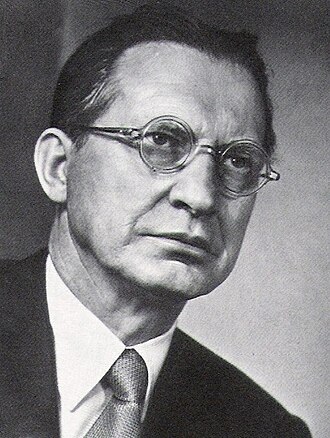
Alcide De Gasperi (1881–1954) — Prime Minister and Founding Father of the Italian Republic of Italy
1. Whole Life & Rise
Born in Austrian-controlled Trentino, De Gasperi's early political activity in Christian social movements led to parliamentary service and imprisonment under fascism, followed by refuge in the Vatican Library during the 1930s. Emerging to lead the Christian Democracy party in 1943, he became Prime Minister in 1945 and presided over the constitutional transition from monarchy to republic, Italy's integration into Western institutions, and the postwar reconstruction. His eight successive governments established unprecedented executive continuity in a fragmented political system.
2. In Their Prime
De Gasperi secured Italy's place in the Marshall Plan, NATO, and the European Coal and Steel Community, anchoring the republic in Atlantic and European frameworks against communist opposition. Domestically, he navigated between Catholic social teaching and pragmatic accommodation with secular and socialist forces, crafting the labor protections and land reforms that underpinned Christian Democracy's hegemony. His 1948 electoral victory against the Popular Democratic Front represented a pivotal consolidation of republican democracy under centrist leadership.
3. Defining Turning Point & Legacy
By 1953, De Gasperi's attempt to reform electoral law toward majoritarian bonus provoked opposition from coalition partners and liberal critics, contributing to his government's collapse and his political marginalization before his death the following year. This 'fraud law' episode complicated his democratic credentials, while subsequent revelations of Christian Democracy's patronage systems retrospectively tarnished the moral purity of his era. His final years witnessed the emergence of factionalism that would eventually consume his party.
4. How Italy Treated Alcide De Gasperi
National Respect Index: 81/100 — Foundational stature as republic builder and Europeanist remains secure, yet entanglement with later Christian Democratic corruption and Cold War alignments generates persistent critical reassessment.
De Gasperi received state funeral honors and sustained commemoration as 'founding father,' yet his legacy became entangled with the later corruption of Christian Democracy and Cold War polarizations that divided interpretive communities. Europeanist narratives celebrate his continental vision; leftist historiography emphasizes his anti-communism and clerical alliances. Contemporary reassessment, particularly following Christian Democracy's dissolution in corruption scandals, has sought to distinguish his personal integrity from his party's subsequent degeneration, preserving his stature as republican architect.
National Psychology & Methodology Signal
De Gasperi's trajectory illustrates Italian capacity to distinguish individual statesmanship from institutional decay, and the enduring prestige accorded to those who construct democratic stability from fragmentation.
More Iconic National Figures of Italy
- Camillo Benso, Count of Cavour (1810–1861) — Prime Minister and Architect of Italian Unification
- Salvo D'Acquisto (1920–1943) — Deputy Sergeant of the Carabinieri and Resistance Martyr
- Rita Levi-Montalcini (1909–2012) — Neurobiologist, Nobel Laureate, and Senator for Life
- Roberto Baggio (1967–present) — Professional Footballer and UNESCO Goodwill Ambassador
- Aldo Moro (1916–1978) — Five-Time Prime Minister and Statesman of the Christian Democracy
- Luciano Pavarotti (1935–2007) — Operatic tenor and global ambassador of bel canto
- Samantha Cristoforetti (1977–present) — Astronaut, Aeronautical Engineer, and Italian Air Force Officer