All National Heroes & Leaders of FI · FI Live News Desk
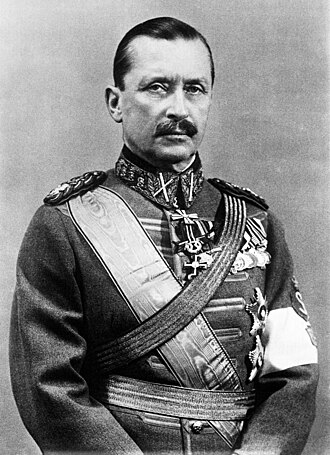
Carl Gustaf Emil Mannerheim (1867–1951) — Marshal of Finland and Sixth President of FI
1. Whole Life & Rise
Born to a Swedish-speaking aristocratic family, Mannerheim pursued a distinguished career in the Imperial Russian Army before the 1917 revolutions, returning to Finland during its declaration of independence to assume military command. His strategic leadership in the Civil War of 1918 established the governmental authority of the newly independent republic, while his subsequent diplomatic and administrative roles bridged monarchist and republican political currents. Elected president in 1944 during existential wartime crisis, he navigated the transition from German co-belligerence to armistice with the Soviet Union, preserving Finnish state continuity.
2. In Their Prime
As commander-in-chief during the Winter War (1939–1940) and Continuation War (1941–1944), Mannerheim embodied national resistance against vastly superior Soviet forces, with his birthday becoming a spontaneous public commemoration during the conflict. His 1942 seventy-fifth birthday observance drew unprecedented popular expression of collective gratitude, transcending political faction. Presidential assumption in 1944 required managing Soviet armistice terms while preventing domestic political collapse or Allied occupation.
3. Defining Turning Point & Legacy
Declining health compelled his presidential resignation in 1946, with the postwar political settlement requiring his departure to permit full parliamentary normalization and leftist political reintegration. His final years witnessed Finland's adjustment to the 1947 Paris Treaty constraints, including war reparations fulfillment and territorial cession. He died in 1951, having lived to see the institutional foundations he helped establish survive existential challenge.
4. How FI Treated Carl Gustaf Emil Mannerheim
National Respect Index: 85/100 — Enduring institutional commemoration and broad public recognition persist alongside sophisticated historiographical examination that contextualizes rather than demonizes controversial decisions.
Mannerheim occupies a singular position in Finnish civic memory: the Mannerheim Museum preserves his residence as national heritage, while his equestrian statue dominates Helsinki's central ceremonial space; historians note his complex legacy encompasses both indispensable state-preservation and association with civil-war violence and German alignment. Academic historiography has progressively contextualized his decisions within structural constraints rather than personal moral evaluation, with admirers emphasizing his wartime realism and critics examining authoritarian tendencies in his 1918 command. Contemporary commemoration emphasizes his 1944–1946 presidential stewardship of peaceful transition over earlier military leadership.
National Psychology & Methodology Signal
Mannerheim's arc reveals Finnish willingness to accommodate complex, even contradictory leadership legacies when state survival is attributed to individual stewardship, while demanding eventual subordination to parliamentary norms.
More Iconic National Figures of FI
- Simo Häyhä (1905–2002) — Winter War Sniper and Infantry Soldier
- Mauno Henrik Koivisto (1923–2017) — Ninth President of Finland and Social Democratic Prime Minister
- Aino Sibelius (1871–1969) — Pioneering Botanist and Plant Cytologist
- Tove Jansson (1914–2001) — Author, Artist, and Creator of the Moomins
- Paavo Johannes Nurmi (1897–1973) — Olympic Middle- and Long-Distance Runner
- Minna Canth (1844–1897) — Playwright, Novelist, and Social Reformer
- Jean Sibelius (1865–1957) — Symphonic Composer and National Romantic Artist
- Artturi Ilmari Virtanen (1895–1973) — Biochemist and Nobel Laureate in Chemistry
- Lauri Allan Törni (1919–1965) — Decorated Infantry Officer and Special Forces Soldier