All National Heroes & Leaders of Ethiopia · Ethiopia Live News Desk
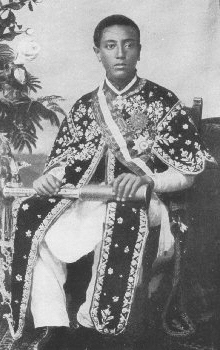
Lij Iyasu (1895–1935) — Designated Emperor of Ethiopia (1913–1916) of Ethiopia
1. Whole Life & Rise
Grandson of Menelik II and designated heir to the Solomonic throne, Lij Iyasu was enthroned in 1913 following his grandfather's incapacitation, representing a generational transition in Ethiopia's imperial governance framework.
2. In Their Prime
His brief administration pursued diplomatic diversification, reaching toward Ottoman and Central Powers connections while navigating Italian colonial pressures; admirers emphasize his efforts to incorporate Muslim populations more centrally into imperial political structures and his resistance to exclusive great-power alignment.
3. Defining Turning Point & Legacy
In 1916, a coalition of aristocratic, ecclesiastical, and military notables declared his deposition citing concerns over religious orientation and governance stability, installing Empress Zewditu in his place; historians note that differing public interpretations persist regarding whether this constituted a necessary constitutional transition or an aristocratic circumvention of designated succession.
4. How Ethiopia Treated Lij Iyasu
National Respect Index: 58/100 — Emerging from systematic historical marginalization toward partial civic rehabilitation, though institutional recognition remains contested and geographically uneven.
Imperial institutions under Haile Selassie and subsequent governance frameworks largely excluded Iyasu from official commemoration, yet regional and popular memory preserved his significance; contemporary historical reassessment has generated renewed scholarly and civic interest, with some political coalitions invoking his inclusive orientation while others emphasize the institutional legitimacy of his removal.
National Psychology & Methodology Signal
Iyasu's oscillation between official erasure and selective reclamation exposes Ethiopia's unresolved tension between centralized institutional continuity and suppressed alternative political imaginaries.
More Iconic National Figures of Ethiopia
- Menelik II (1844–1913) — Emperor of Ethiopia and Architect of Modern State Consolidation
- Ras Alula Engida (1827–1897) — General and Defender of Northern Frontiers
- Birtukan Mideksa (1975–present) — Judge, Opposition Leader, and Electoral Reform Commissioner
- Aklilu Lemma (1934–1997) — Biomedical Researcher and Endod (Phytolacca dodecandra) Pioneer
- Tilahun Gessesse (1940–2009) — Ethiopian Music Legend and Cultural Voice
- Abebe Bikila (1932–1973) — Marathon Runner and Double Olympic Gold Medalist
- Emperor Zewditu I (1876–1930) — Reigning Empress and First Female Head of State in Modern Africa
- Gebisa Ejeta (1950–present) — Plant Breeder and 2009 World Food Prize Laureate
- Lij Alemayehu Gebre-Mariam (1935–1936) — Young Prince and Symbol of Anti-Fascist Resistance