All National Heroes & Leaders of CR · CR Live News Desk
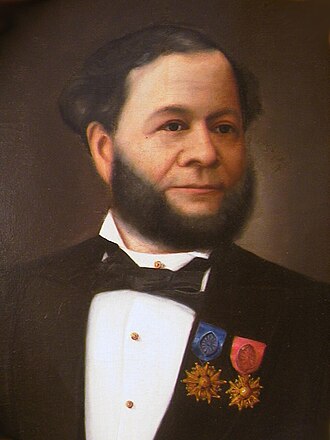
José María Castro Madriz (1818–1892) — First President and Independence Architect of CR
1. Whole Life & Rise
Born in San José to a creole merchant family, Castro Madriz received legal education in León, Nicaragua, before emerging as a principal advocate for Costa Rican sovereignty within the Central American Federation. His intellectual formation in Enlightenment jurisprudence and constitutional theory positioned him to articulate a governance vision emphasizing legal codification, press freedom, and secular public education as foundations of republican citizenship.
2. In Their Prime
As Head of State during 1847–1849 and 1866–1868, Castro Madriz presided over the 1848 constitutional promulgation that formally established the Republic, founded the University of Santo Tomás (predecessor to the University of Costa Rica), and instituted civil marriage and public registries that diminished ecclesiastical jurisdictional claims. His administrations championed the 1849 abolition of the death penalty and initial press liberty guarantees that established precedents for subsequent liberal governance frameworks.
3. Defining Turning Point & Legacy
His second administration concluded through constitutional transition rather than personalist rupture, though conservative opposition to his anticlerical measures and educational secularization constrained legislative achievement; he subsequently served as ambassador and magistrate, demonstrating institutional commitment beyond executive tenure. His final decades witnessed marginalization from dominant military-caudillo politics until liberal reascendance permitted rehabilitated scholarly recognition.
4. How CR Treated José María Castro Madriz
National Respect Index: 87/100 — His foundational status, institutional contributions to education and legal codification, and non-militarized governance model align precisely with dominant national self-conceptions, sustaining durable veneration across partisan divides.
Civic memory commemorates Castro Madriz through municipal nomenclature, the eponymous national university campus, and curriculum integration as the 'Founder of the Republic,' with historians noting his constitutional formalism established institutional templates that outlived subsequent authoritarian interludes. Admirers emphasize his precocious commitment to press freedom and capital punishment abolition; critics of the foundational generation highlight incomplete indigenous incorporation and property qualifications within his constitutional design, though such reassessments operate within scholarly rather than popular contestation.
National Psychology & Methodology Signal
The Castro Madriz arc reveals Costa Rica's preference for leadership legitimation through institutional creation and legal formalism over charismatic mobilization, with the national psychology prizing constitutional architects who establish reproducible governance frameworks.
More Iconic National Figures of CR
- José Figueres Ferrer (1906–1990) — Three-Time President and Social Reformer
- Juan Santamaría (1831–1856) — National Hero and Campaign Volunteer
- Franklin Chang Díaz (1950–present) — Astronaut, Plasma Physicist, and Space Technology Pioneer
- María Isabel Carvajal Quesada (1887–1949) — Writer, Educator, and Children's Literature Pioneer
- Claudia Poll Ahrens (1972–present) — Olympic Swimming Champion and National Sports Icon
- Emma Gamboa Alvarado (1901–1976) — Pioneering Educator and Women's Rights Advocate
- José Basilio Villarreal Quirós (1912–1990) — National Poet and Literary Voice of Costa Rican Identity
- Luisa González Gutiérrez (1877–1962) — Educator, Suffragist, and Diplomatic Delegate
- José María Cañas Escamilla (1809–1860) — Military Commander and National Defense Leader